


Core Figures at a Glance
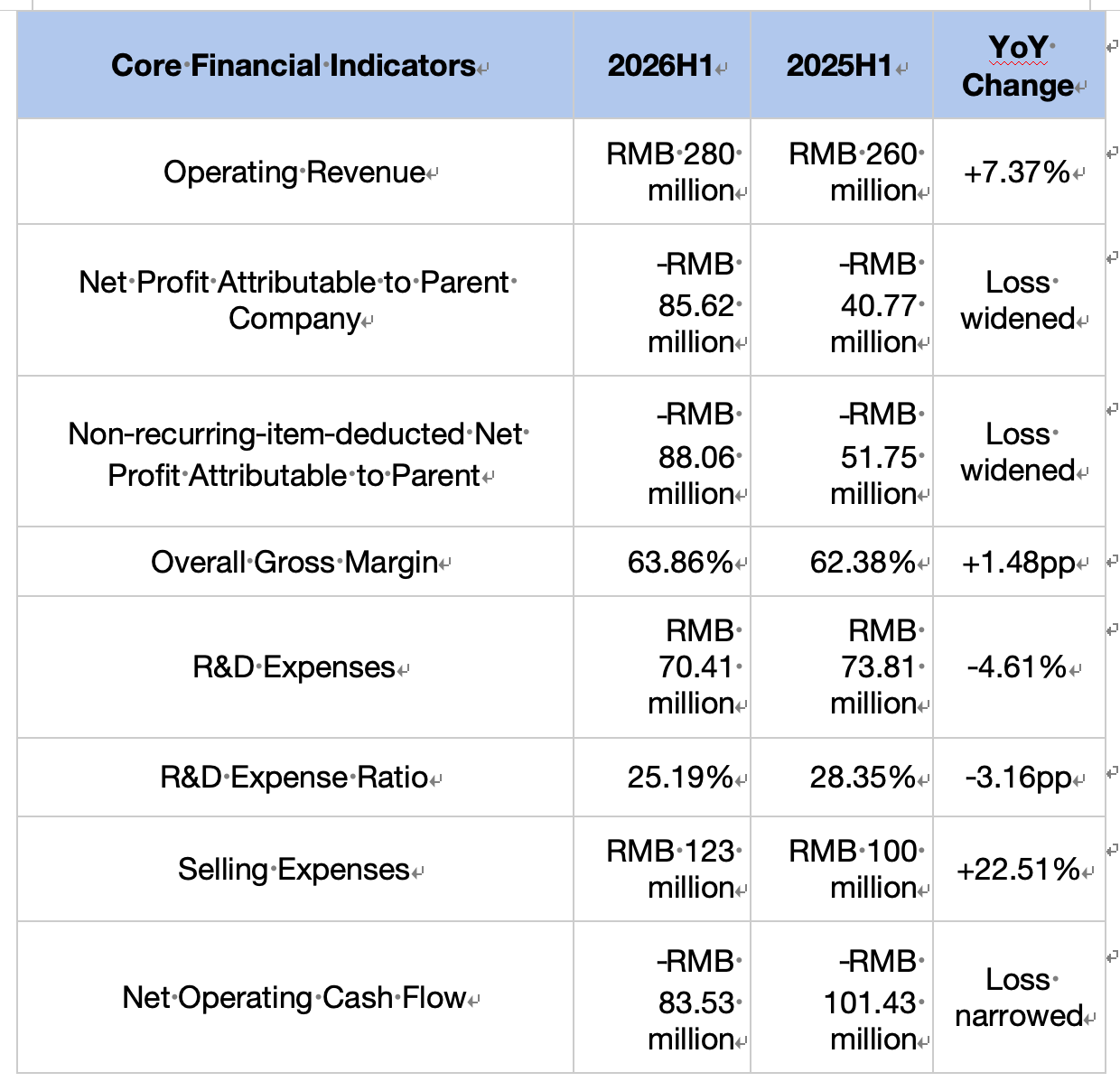
Key financials below (rounded figures). In H1 2026, Aohua Endoscopy posted operating revenue of RMB 280 million (exact: RMB 279.5 million), representing a 7.37% year on year increase. Net profit attributable to parent company stood at RMB 85.62 million versus RMB 40.77 million in the prior year period, with losses widening by approximately 110%. Non recurring item deducted net profit reached RMB 88.06 million.
Third, the widening losses do not stem from gross‑margin‑side issues.
Larger losses result from three factors combined: supplementary tax payments, shrinking government subsidies, and rising operating expenses.
Why Losses Widened
Key Observations:
First, the 7.37% revenue growth is genuine, mainly driven by volume growth in the domestic market.
As explicitly stated in the semi annual report, “revenue benefited from the expanded promotion and adoption of flagship models among domestic medical institutions”. The mid to high end AQ 300 series has gained accelerated penetration in tertiary hospitals, while the flagship 3D AQ 400 unit sees faster installation. This serves as a positive signal for domestic flexible endoscope makers making inroads into tertiary hospital settings.
As a leading manufacturer of endoscopic consumables, we have been closely monitoring Aohua’s deployment in the domestic GI endoscopy market. Our biopsy forceps, injection needles, hemoclips and polypsnares have been widely adopted in hospitals equipped with Aohua’s AQ series systems, offering reliable compatibility and stable performance. We welcome inquiries from hospitals and distributors looking for high quality, cost effective consumable solutions.
Second, gross margin rose by 1.48 percentage points against headwinds.
Despite broad‑based pressure from expenses, gross margin climbed instead of declining (63.86% vs. 62.38% in the prior‑year period). This points to an improved product mix: higher‑margin equipment revenue accounts for an increased share of total revenue (equipment revenue hit RMB 266 million, representing over 95% of total revenue), while low‑margin consumables remain small in scale.
1. Supplementary tax payment of RMB 12.17 million
On July 1, the company released a separate announcement. Following internal tax self‑inspection, supplementary taxes and late‑payment surcharges totaling RMB 12.173 million were payable. The full amount has been settled; no administrative penalties are involved, and the amount was recorded in the current‑period profit and loss for 2026. This charge directly eroded corporate profits.
2. Sharp decline in government subsidies
The semi‑annual report noted that “government subsidies received in the current period decreased compared with the same period of last year, and other income dropped substantially year‑on‑year”. According to the income statement, other income swung from a positive value of +RMB 25.90 million in the prior‑year period to a negative reading of ‑RMB 5.75 million this year.
3. Selling expenses rose by 22.51%+, and finance expenses turned positive from negative
Selling expenses increased from RMB 100 million to RMB 123 million, representing a 22.51% growth. It should be noted that, as explained in the semi‑annual report, this was mainly due to “the reversal of accrued share‑based payment expenses in the same period last year, with no such items in the current period”. In other words, last‑year’s base figure was artificially lowered, while this year returned to normal accrual standards.
Finance expenses shifted from ‑RMB 0.82 million to +RMB 7.88 million, mainly attributable to higher net foreign‑exchange losses caused by exchange‑rate fluctuations, as well as rising interest expenses on borrowings for the new production‑base project.
Taken together, these three factors well explain the seemingly contradictory phenomenon of “7% revenue growth alongside doubled losses”.
Furthermore, Aohua continues heavy investment in R&D expenditure, which also weighs on profits.
Product Mix: Equipment as Core Driver, Aggressive Technology R&D
Aohua is an equipment‑oriented enterprise:
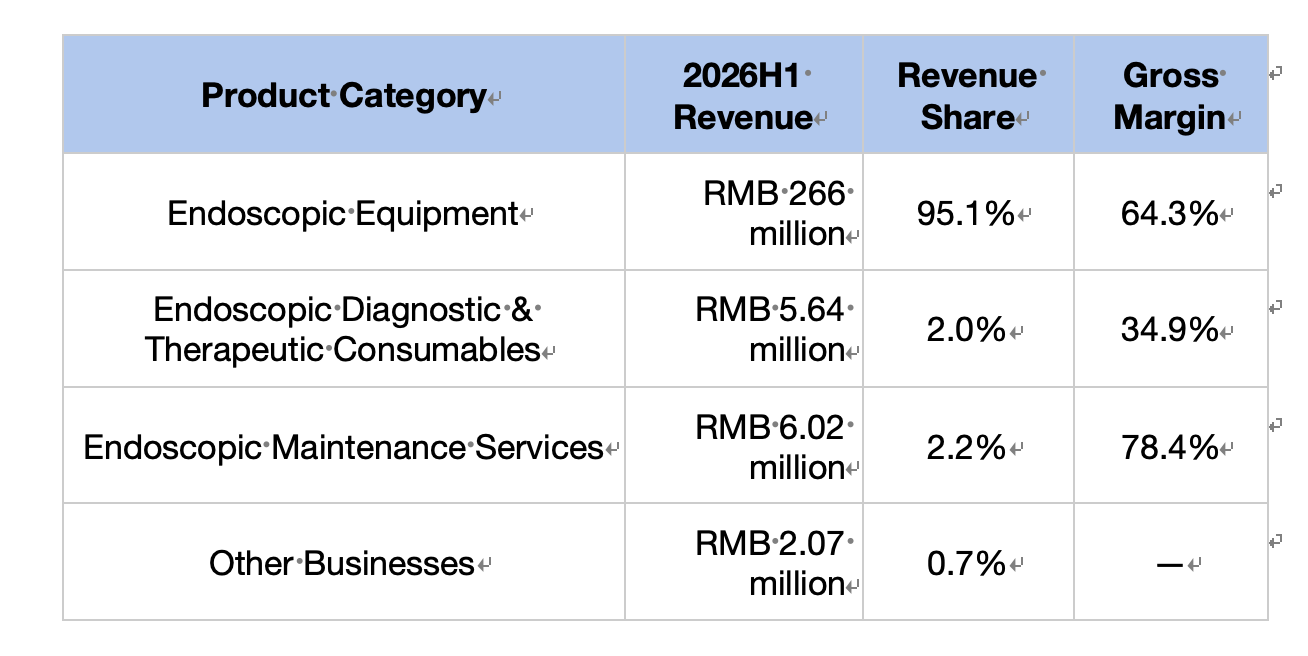
Equipment revenue accounts for over 95% of total revenue, while consumable business remains small‑scale at only RMB 5.64 million. The gross margin of consumable business stands at merely 34.9%, substantially lower than that of peer consumable products.
Both domestic endoscopic equipment manufacturers have rolled out endoscopic consumables, yet sales performance of such products has fallen short of expectations.
This is precisely where we come in. As a specialized OEM/ODM manufacturer of endoscopic consumables, we offer a full range of biopsy forceps, injection needles, polypsnares, hemoclips and stone retrieval baskets — with competitive pricing and proven compatibility with major endoscope brands including Aohua. We are currently supporting multiple domestic equipment manufacturers in expanding their consumables offerings. If Aohua or its channel partners are looking to strengthen their consumables portfolio, we are ready to provide customized solutions.
Three highlights in the first half-year:
1. Accelerated installation of the AQ‑400 3D ultra‑high‑definition flexible endoscope system.
2. ERCP surgical robot enters NMPA Innovative Device pathway.
In May 2026, the company’s upper gastrointestinal electronic endoscope surgical control system was officially admitted to the NMPA Special Review Procedure for Innovative Medical Devices.
3. Continuous launch of new products.
During the reporting period, the company released the 60‑series nasopharyngolaryngoscope, brand‑new ENT endoscope camera, and bronchoscope‑assisted quality‑control software (AH‑REQS1, capable of bronchial‑tree localization recognition and examination quality control). The digestive endoscopic ultrasound has been submitted for registration (the echoendoscope obtained marketing approval in July).
R&D investment reached RMB 70.41 million. The 25% R&D expense ratio remains at a fairly high level within the medical device sector.
Miscellaneous
1. Setbacks in equity incentive plans
In April 2026, the company cancelled part of granted but unvested shares under the 2023 Restricted Stock Incentive Plan. A total of 1,499,250 shares under the 2025 Employee Stock Ownership Plan were unlocked upon expiry of the lock up period at the end of June.
2. High proportion of accounts receivable
Accounts receivable at period end stood at RMB 371 million, accounting for 19.16% of total assets, representing an increase of approximately RMB 60 million compared with the same period last year.
Summary
From an industry perspective, import substitution for domestic flexible endoscopes remains the mainstream trend. Competition in domestic gastrointestinal endoscope sales intensified notably this year. Nevertheless, judging from the market share of digestive endoscopes in H1, import substitution still boasts substantial room for growth, and manufacturers face numerous tasks ahead. Rising gross margin indicates that Aohua’s long term strategy built upon heavy investment in R&D and sales — covering 4K, 3D, AI and surgical robots — has started to deliver tangible value.
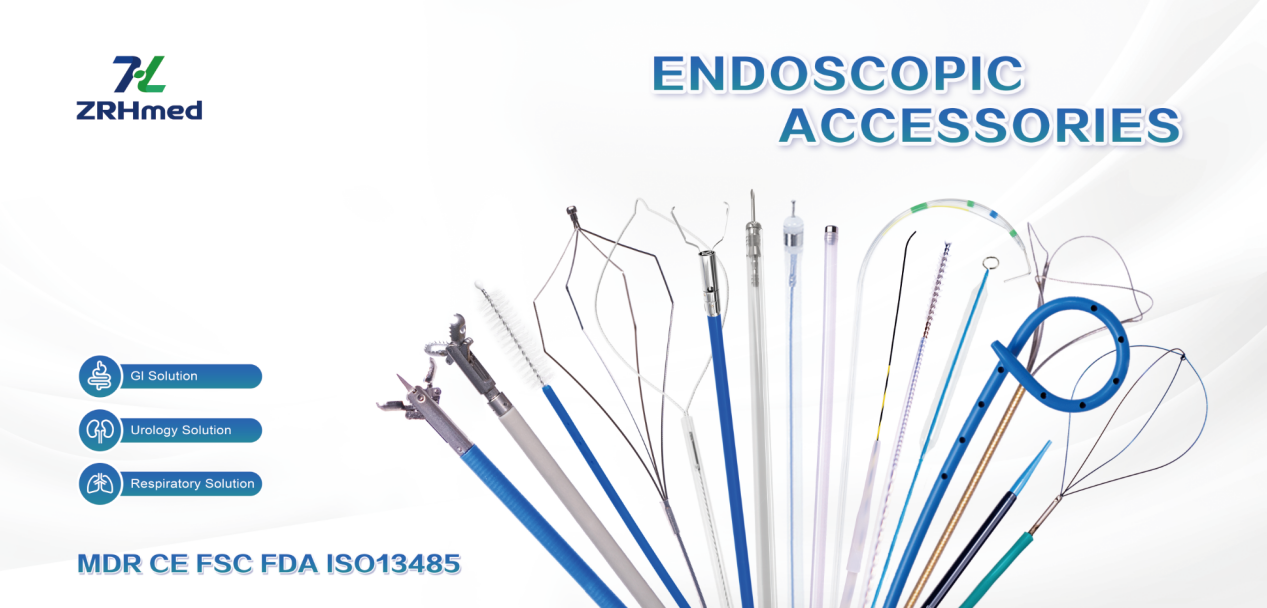
At ZRHmed, we believe the true value of endoscopic systems lies in the breadth and quality of their supporting consumables. With a comprehensive portfolio covering GI, ERCP, and urology applications, we are committed to being a one stop solution provider for endoscope related consumables. Whether you are a hospital, a distributor, or an equipment manufacturer, we are ready to support your needs with reliable products and responsive service. Feel free to reach out — we are always happy to talk.
Post time: Aug-27-2026