


In 2025, China’s trade in endoscopes [Category 9018 (complete units), parts and accessories] still faced a massive deficit, though it is shrinking at a visible pace:
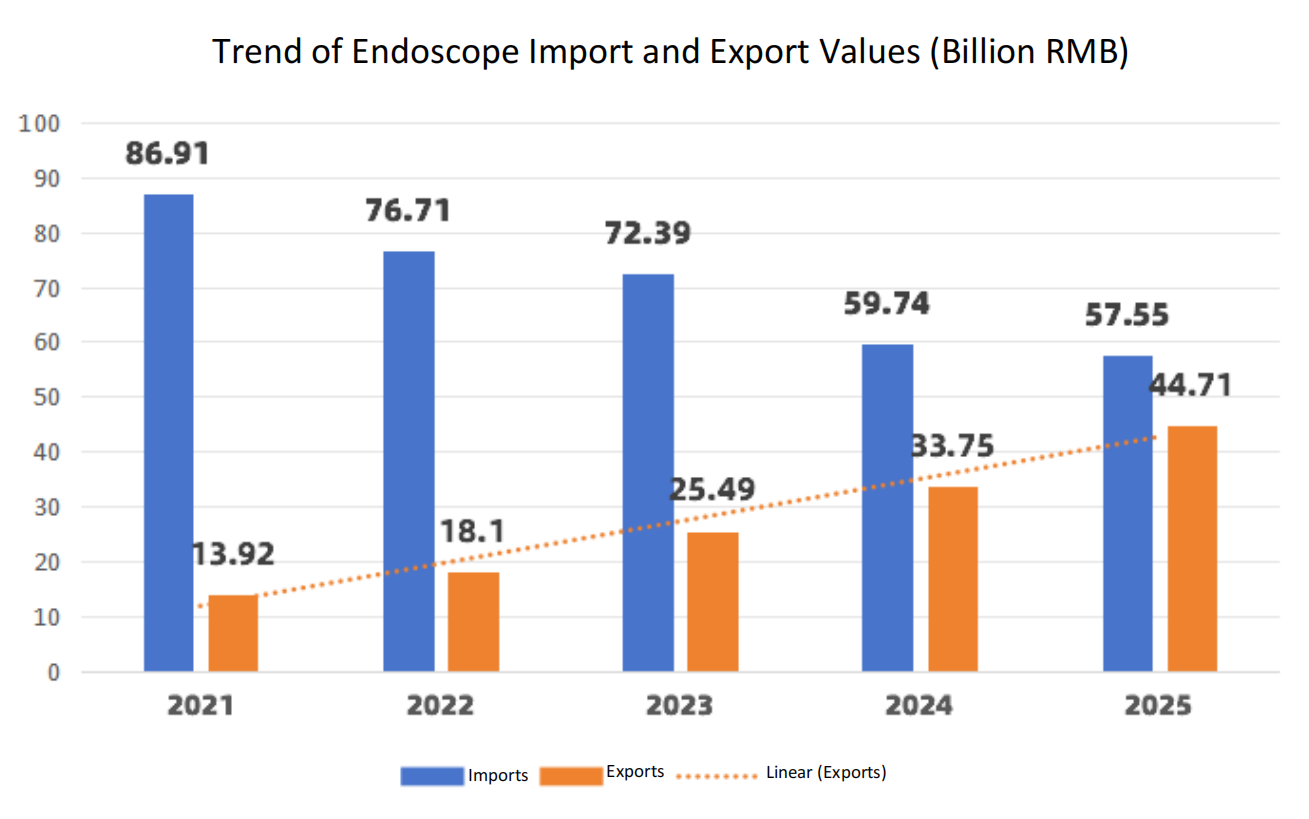
In 2025, the trade deficit for endoscopes stood at 1.2842 billion RMB.
Imports dropped to 5.7549 billion RMB, representing 66.2% of the 2021 level, while exports surged to 4.4707 billion RMB, hitting 321% of the 2021 figure.
▶
Import and Export Provinces
In 2025, the top three provinces by registered company location for endoscope imports were Shanghai, Jiangsu, and Beijing, accounting for 80.85%, 12.16%, and 2.19% respectively.
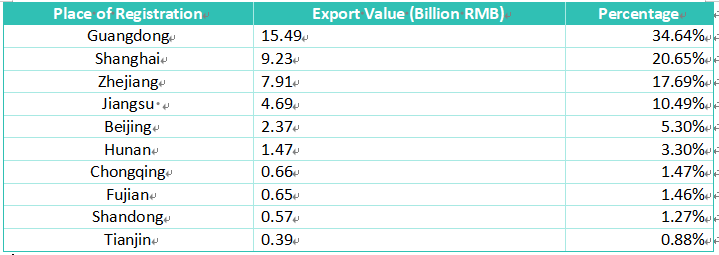
In 2025, the top 5 provinces for endoscope exports were Guangdong, Shanghai, Zhejiang, Jiangsu, and Beijing. The top 10 provinces accounted for 97.13% of the total export volume.
Details are as follows. Note that the relocation of production is driven by the global strategies of Chinese endoscope enterprises and tariff actions:
▶
Import and Export Countries and Regions
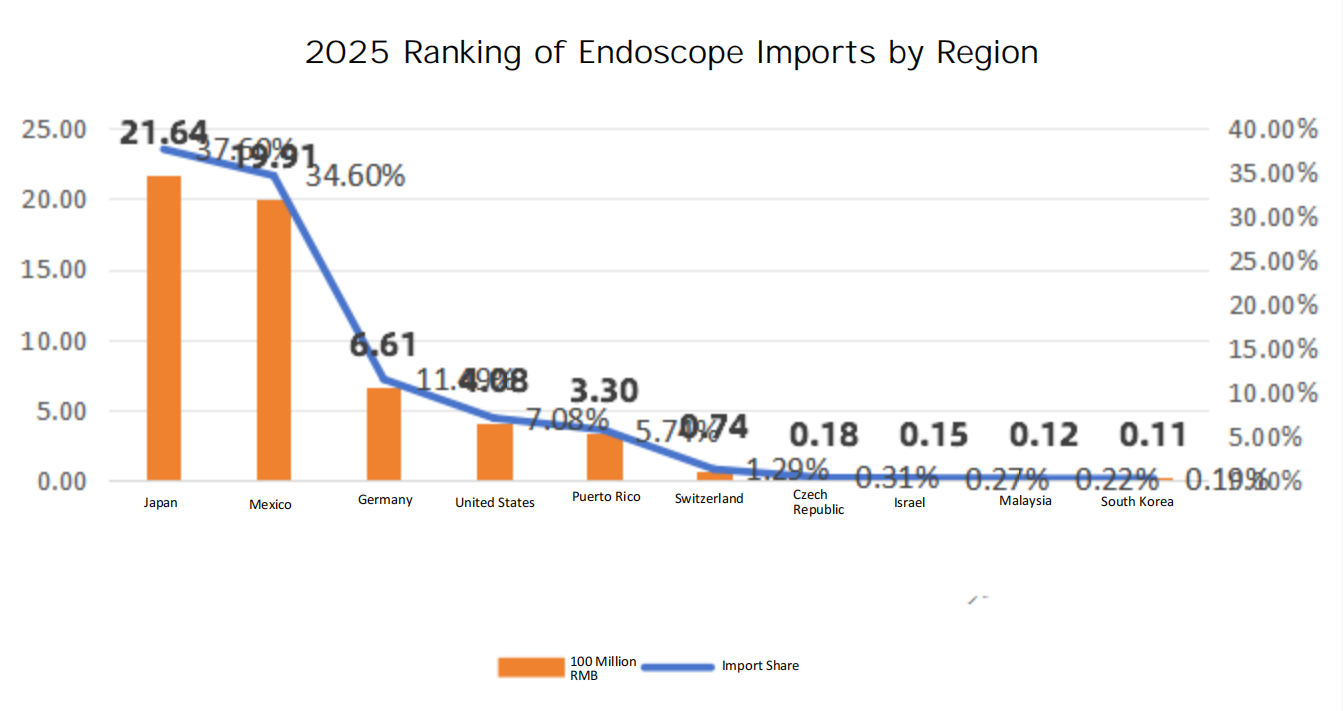
In 2025, the import value was approximately 5.755 billion RMB. Imports involved 37 countries and regions, with the top 10 accounting for 98.79% of the total. These leading partners are Japan, Mexico, Germany, the United States, Puerto Rico, Switzerland, the Czech Republic, Israel, Malaysia, and South Korea—all of which are powerhouses in endoscope manufacturing or processing.
Take Mexico for example. Its rise is a result of the globalization of endoscope production. Proximity to the U.S. makes it an ideal location for factories, and Mexico has become one of the biggest beneficiaries of U.S. tariffs.
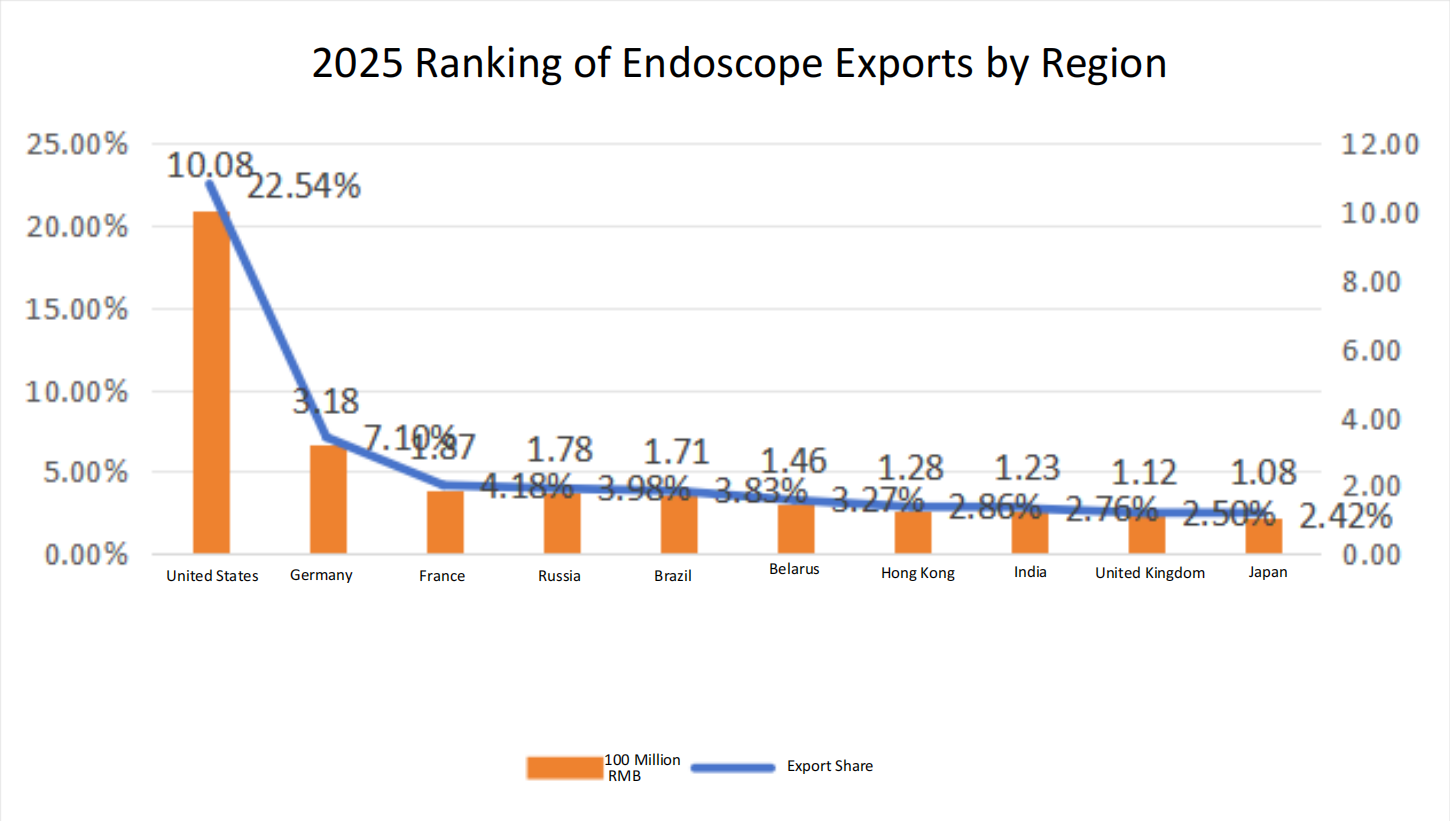
In 2025, the export value reached approximately 4.471 billion RMB. Exports covered 182 countries and regions, with the top 10 accounting for 55.43% of the total. These leading markets are the United States, Germany, France, Russia, Brazil, Belarus, Hong Kong, India, the United Kingdom, and Japan.
Countries and regions ranked 11th to 20th account for 17.84% of the total. These include Malaysia, South Korea, Italy, Spain, Poland, Turkey, Saudi Arabia, Taiwan, Australia, and Argentina.
The data indicates that China’s endoscope exports are distributed globally with a low degree of concentration.
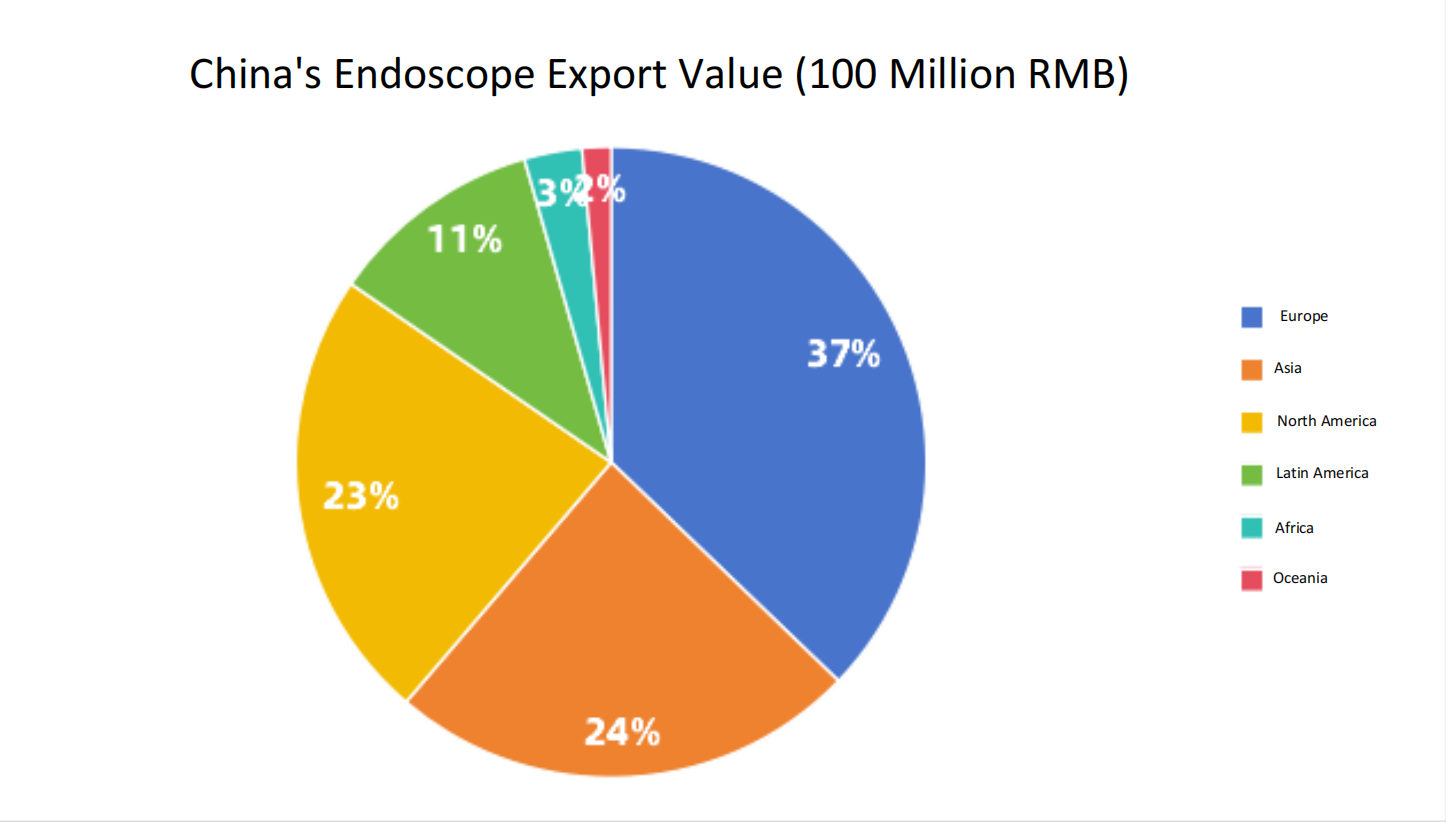
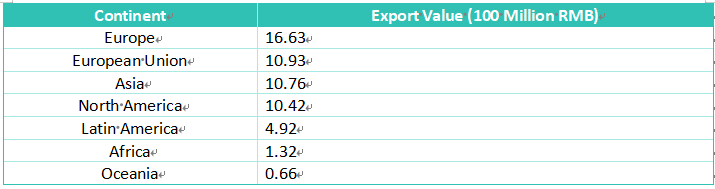
Among China’s endoscope export partners, there are 49 countries and regions in Africa, followed by Asia and Europe. Notably, EU countries account for 65.74% of the export value to European partners.
▶
Import-Export Balance of Endoscope Powers
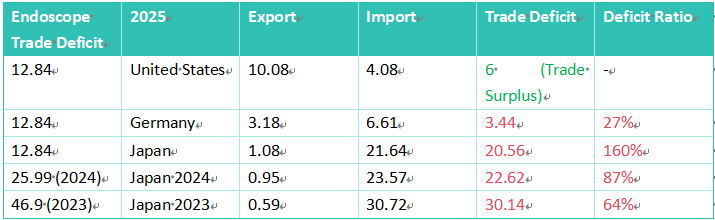
As shown by the red text in the chart above, the overall endoscope trade deficit is shrinking year by year, and even the deficit with Japan is decreasing. However, the deficit with Japan remains massive at 2.056 billion RMB! This figure has already surpassed China’s overall endoscope trade deficit of 1.284 billion RMB in 2025. Furthermore, the proportion of the trade deficit with Japan is rising annually!
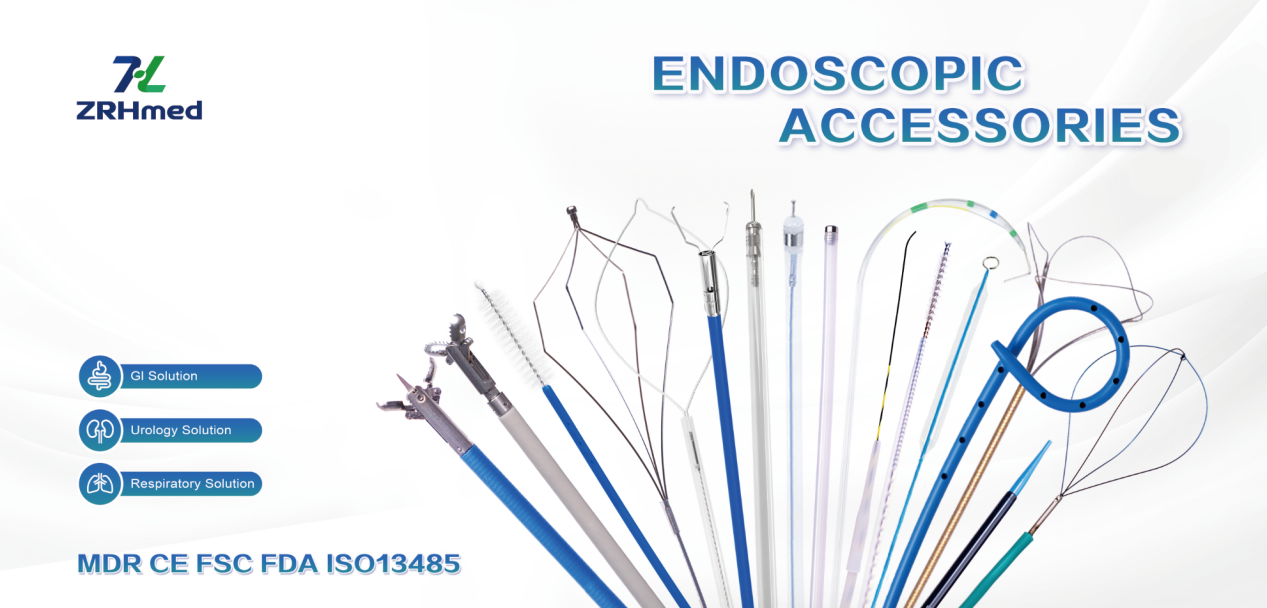
Behind every endoscope export is a complete ecosystem of supporting accessories. While endoscope systems get the spotlight, the consumables that pass through them are equally critical to clinical success:
At ZRHmed, we focus precisely on these essentials. With MDR CE certification and a growing global presence, we support distributors and manufacturers in over 30 countries. Our products are designed for compatibility, reliability, and consistent performance.
As Chinese endoscope brands expand overseas, we believe reliable local accessory supply will become an increasingly important part of the value chain.
The underlying optics and electronics sectors are not as optimistic as the current market share of endoscope terminals suggests. There is still a long way to go for the development of core technologies and high-end endoscopes. However, the proportion of domestic components this year might just hit the “nitrogen accelerator” for the localization of endoscopes once again.
Post time: Apr-28-2026