


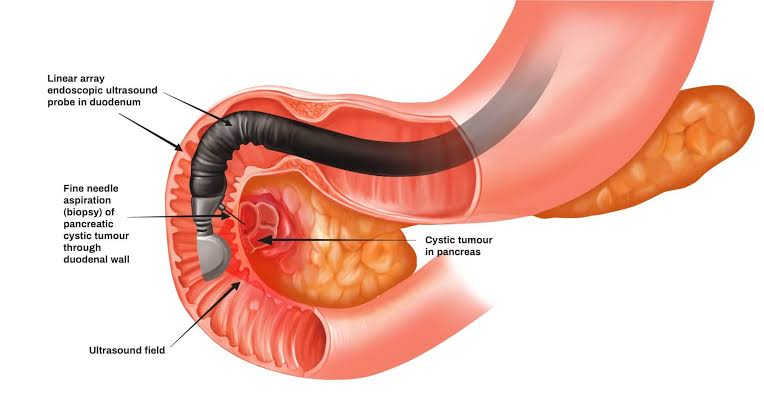
I’ve been mulling over the topic of ‘disposable mini endoscopic ultrasound probes’ after reviewing annual reports of several listed companies. I’m bringing it up today because the industry backdrop is now in place — you all know what that means.
I discussed this with Mr. Dong from Jiangsu and Mr. Chen from Zhejiang last year, and we reached the same conclusion: it is technically feasible when evaluated from the perspectives of volume and cost.
Why keep thinking about the disposable route? Disposability is one of the major industry trends, and it comes with inherent advantages. I’m laying out this topic today to share my thoughts as a starting point for further discussion, hoping to contribute to China’s endoscopic industry.
Now let’s get down to business. The analysis focuses primarily on the Chinese market, with global data for reference.
I. Appearance & Form Factor
This is what an endoscopic ultrasound probe looks like. It can be reasonably predicted that there will be no notable changes in appearance even after it is made disposable.
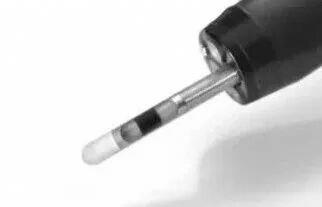
It is inserted through the biopsy channel of a gastroscope, colonoscope, bronchoscope, duodenoscope or other endoscopes. It adopts mechanical rotational scanning with a frequency range of 12–30 MHz. As for service life, it is hard to estimate.
II. Market Size
In 2023, hospitals that submitted statistical data nationwide performed 456,000 digestive EUS procedures across 1,444 medical institutions. Tertiary general hospitals accounted for 84.49% of the total workload.
Citing national EUS survey data published in Endoscopic Ultrasound by Professor Jin Zhendong, over 80% of examinations were intraluminal gastrointestinal procedures, while biliary and pancreatic procedures made up less than 20%. EUS-FNA accounted for fewer than 5% of total cases.
For unit price estimation, you may refer to the IVUS volume-based procurement price with further downward adjustment.
III. Current Competitive Landscape
Brands are divided into two camps: Chinese and Japanese players.
- Chinese players: InnerMed, SonoScape, Lepu Smart Imaging, REFRESH SIGNT
- Japanese players: Olympus, Fujifilm, Pentax
The current market status is jointly shaped by technical barriers, device binding requirements, probe volume constraints and other factors. In addition, products fall under Class III medical device registration requirements in China.
EUS probes are priced at tens of thousands of RMB each, while complete host systems range from several hundred thousand to RMB 3 million. (Estimated based on self compiled statistics of device specifications and pricing.)
IV. Driving Force Analysis
V. Risk Factors
- Practicality
- Probability of volume based procurement (VBP) inclusion
- Per unit cost (referencing IVUS VBP pricing)
- Market penetration rate
- Class III device registration timeline
Conclusion: The shift toward disposable probes marks another starting point for endoscopy. Multiple companies are already developing disposable gastrointestinal endoscopes. What is your take on the outlook for disposable endoscopic probes?
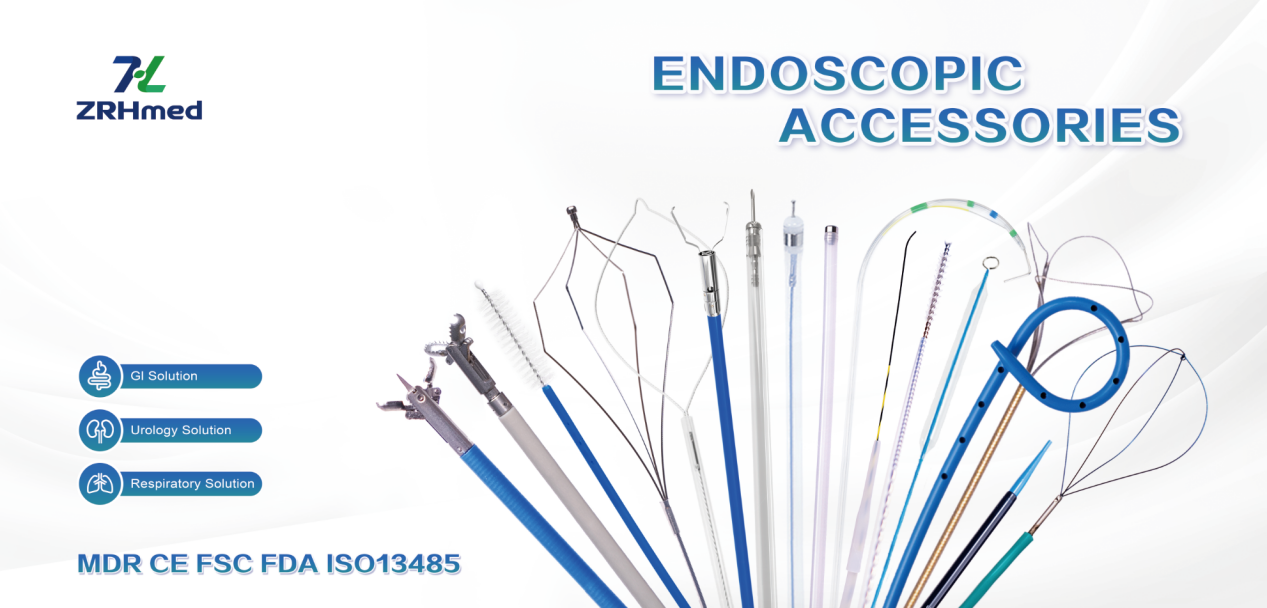
Whether EUS probes become disposable or not, every EUS procedure still relies on a full set of supporting consumables – injection needles, guidewires, cytology brushes, hemostatic clips, and biopsy forceps. ZRHmed (Jiangxi Zhuoruihua Medical) , a Chinese manufacturer of endoscopic accessories, offers a comprehensive gastroenterology portfolio with MDR CE and ISO 13485 certification. While not producing EUS probes or FNA needles, ZRHmed supports the broader EUS workflow with reliable, cost-effective consumables. The company provides Tier-1 distribution partnerships with direct factory pricing, helping distributors protect margins in a VBP-driven market. As the endoscopy ecosystem evolves, ZRHmed stands ready to support your growth – from EUS to ERCP and beyond. Contact us to explore partnership opportunities.
Post time: Sep-21-2026