


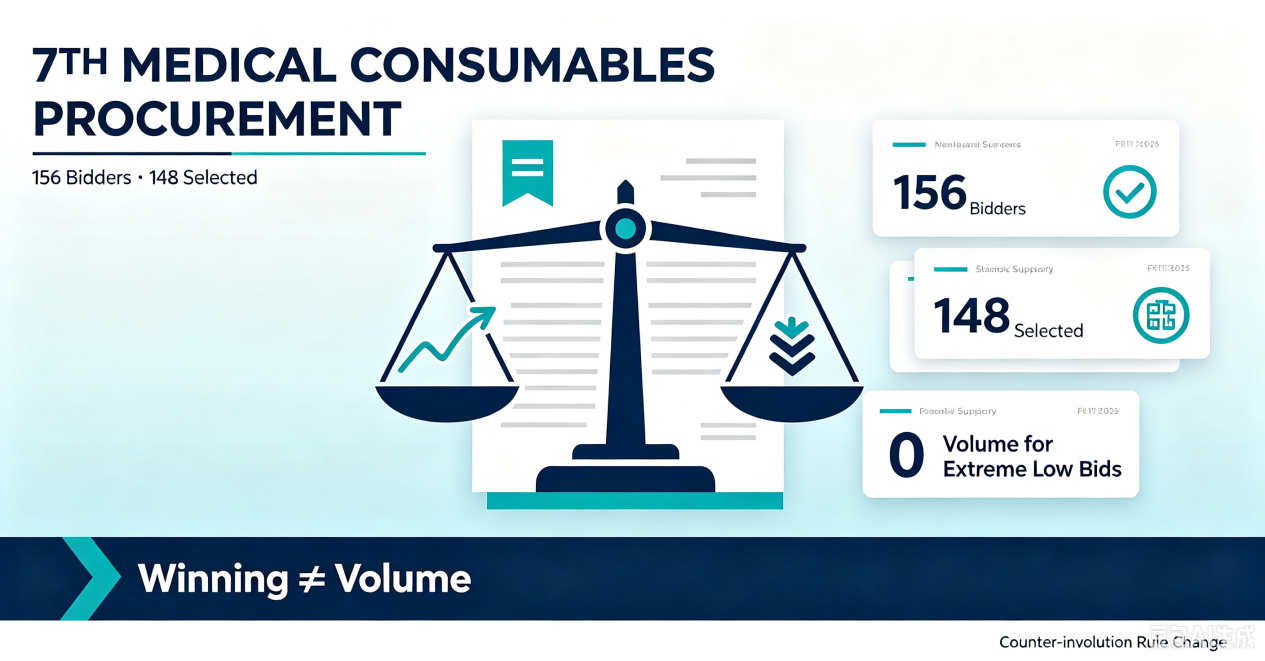
69 Bidders, 64 Winners — This Doesn’t Look Like the Centralized Procurement I Know
On September 10, the 7th batch of nationally organized medical consumables centralized procurement opened bids in Tianjin.
Bidding Below Two Standard Deviations: You Win, but Get Zero Volume
First, the standard deviation. Line up all the qualified companies’ bids, calculate an average price, then calculate how far, on average, each company’s bid deviates from that average — this “average deviation” is the standard deviation. It measures how spread out a group’s bids are. One standard deviation below is meaningfully cheaper than most; two standard deviations below is so cheap that it’s detached from the group.
Anchor point one is the higher of two figures: “the average price minus one standard deviation” and “the lowest bid.”
Anchor point two is the average price minus two standard deviations.
What happens to companies bidding below anchor point two? They are not disqualified. The rules state: the volume allocation ratio drops to 0, the company does not occupy a shortlisted slot, and it must submit a “bid reasonableness statement” explaining its cost structure. In plain language: for bids below the shortlist average by two standard deviations, the company is accepted as a winner, but the agreed procurement volume is 0.
You won — congratulations. The volume hospitals are contractually obligated to purchase — your share is zero. And by the way, please explain how you arrived at that price. This round, some companies did hit this line.
In the previous round, the 6th batch, there was only one anchor point. This batch introduced standard deviation for the first time, changing it to two anchor points. This change fundamentally altered the rules’ attitude toward “the lowest bid.” In the past, bidding the lowest was a skill; bidding the lowest got you the most. Now, a price so low it falls outside two standard deviations from the group is presumed abnormal by the rules — you must justify your costs. The lowest bid has shifted from being an achievement to being a suspect.
5.17 Million Products, 19.268 Million Units — The Second Round Begins After Selection
How much volume is there? The total first-year procurement demand for all categories in this round is approximately 19.268 million units, with the procurement cycle locked until December 31, 2029 — about three years. The 517 selected products will divide this volume. The selection list is just an admission ticket. How volume is allocated is the second round.
Allocation happens in two steps. First, volume is directly allocated to selected companies under the agreement — this is the most secure volume. What isn’t allocated in step one is recorded as “volume pending allocation,” to be distributed later. For companies that fell below anchor point two, the rules are specific: in step one, the agreed procurement volume as a proportion of medical institution demand is 0%, and the corresponding pending allocation proportion is 80%. In other words, the share that would normally be secured in step one — zero units. The vast majority goes back into the pool for the second round. On the same selection list, some products receive a positive number in step one; others receive 0.
Stop Counting the List Length — Watch Where the Volume Lands
In the past, when looking at the consumables centralized procurement process, there was only one variable: did you win the bid? If yes, you had work for the next three years; if no, that product line essentially had no volume. The variable was coarse, but information-rich. Now that the selection rate is near universal, the information content of that variable has been diluted. What truly determines a company’s revenue in this chain has shifted to: how much agreed volume was allocated, how much volume medical institutions reported, whether the product is in Group A or Group B — these are all outside the selection list and cannot be seen on bid opening day.
The official principles for this round are “stabilize clinical use, ensure quality, counter involution, prevent bid rigging.” The rules’ treatment of the lowest bidders is the paper embodiment of “counter involution.”
Partnering for the Future
The 7th VBP has made one thing clear: winning the bid is just the beginning. Volume allocation, registration, and long-term margin management are where the real game is played. For distributors, choosing the right manufacturer matters more than ever.
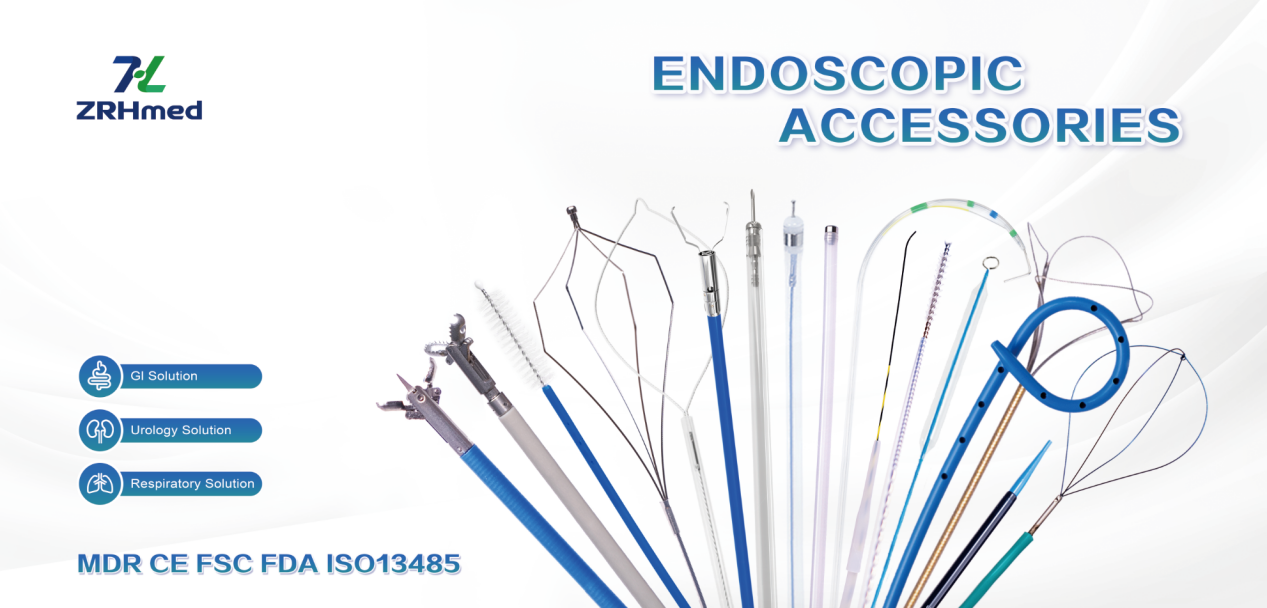
ZRHmed (Jiangxi Zhuoruihua Medical Instrument Co., Ltd.) is a Chinese manufacturer of disposable endoscopic consumables, with a portfolio covering many of the categories in this procurement round – including biopsy forceps, polypectomy snares (cold/hot), hemostatic clips, injection needles, guidewires, stone retrieval baskets, sphincterotome and nasal biliary drainage catheters. Our core products are MDR CE certified and produced under ISO 13485:2016 quality systems.
What sets us apart is our regulatory responsiveness. We provide regulatory support within 3–5 working days, helping partners navigate local registration, tender documentation, and market access. Combined with Tier-1 distribution partnerships and direct factory pricing, ZRHmed gives you a reliable path to protect your margins in a VBP-driven market.
Contact us to explore Tier-1 distribution opportunities in your region.
Post time: Oct-11-2026