



It’s been nearly a year since I started updating the medical endoscope section of this public account. This year, I’ve had the pleasure of getting to know many colleagues in the field, and I’d like to take this opportunity to thank all my readers for their support.
Apart from annual report data and registration data, the articles in May also featured a “critical review” of single-use gastroscopes. Regarding endoscopes, few companies nowadays can resist the temptation to exclusively focus on their existing product categories. Most companies choose to expand their product portfolios to compete in this increasingly crowded industry.
At a crossroads, every direction is a choice. While writing a recent article comparing the annual reports of Sonoscape and Aohua, I started thinking: what is the current state of “Niche and Profitable” versus “Broad and Comprehensive” companies? Let’s take a closer look.
Content Selection
The data and fluctuations selected for this analysis include revenue, profit, expense ratios, domestic vs. international revenue ratios, pure endoscopy revenue, Q4 and Q1 comparisons; and endoscopy product portfolio layout, core products/areas, and business models.
Companies Compared
Tiansong Medical, Seesheen Medical, NovelBeam, Fanxing Medical, Aohua Endoscopy, Sonoscape Medical, Mindray Medical.
Ranked by Gross Margin
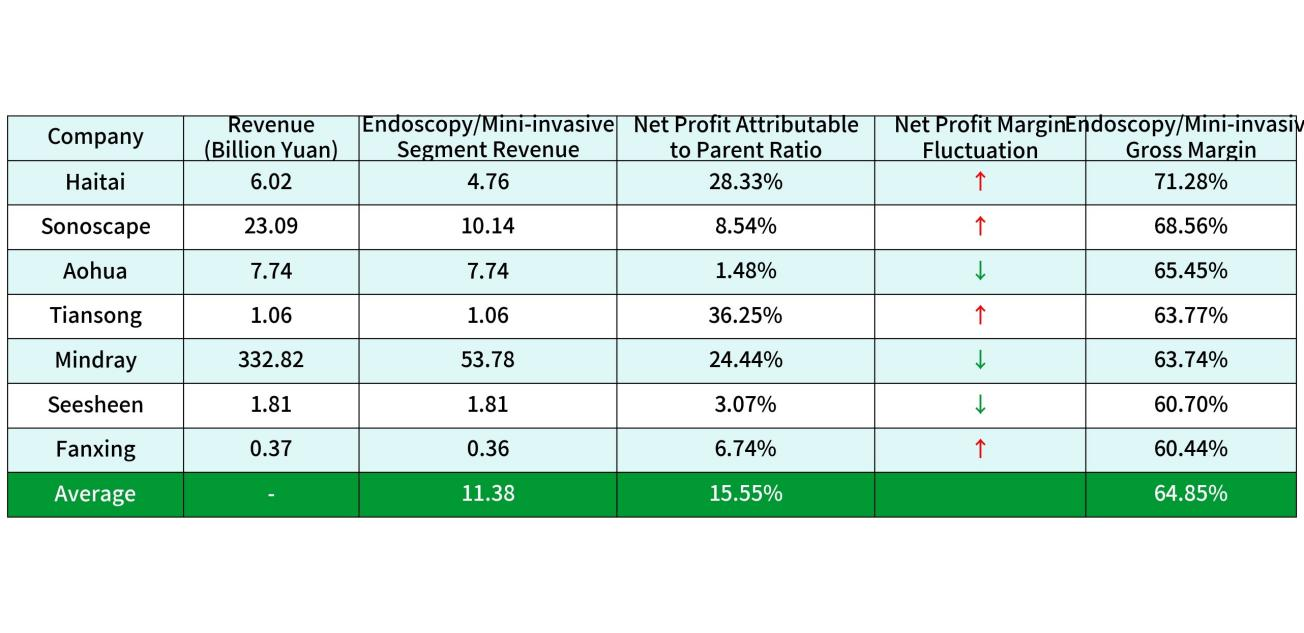
The average gross margin in the endoscopy field for these 7 companies is approximately 64.9%, with an average net profit margin of 15.6%. However, there is significant polarization — some companies have very high net profit margins while others are very low. Looking at revenue and profit margins, “Niche and Profitable” versus “Broad and Comprehensive” appears to be a false dichotomy.
Product Portfolio & Sales Model (Sorted by Gross Margin)
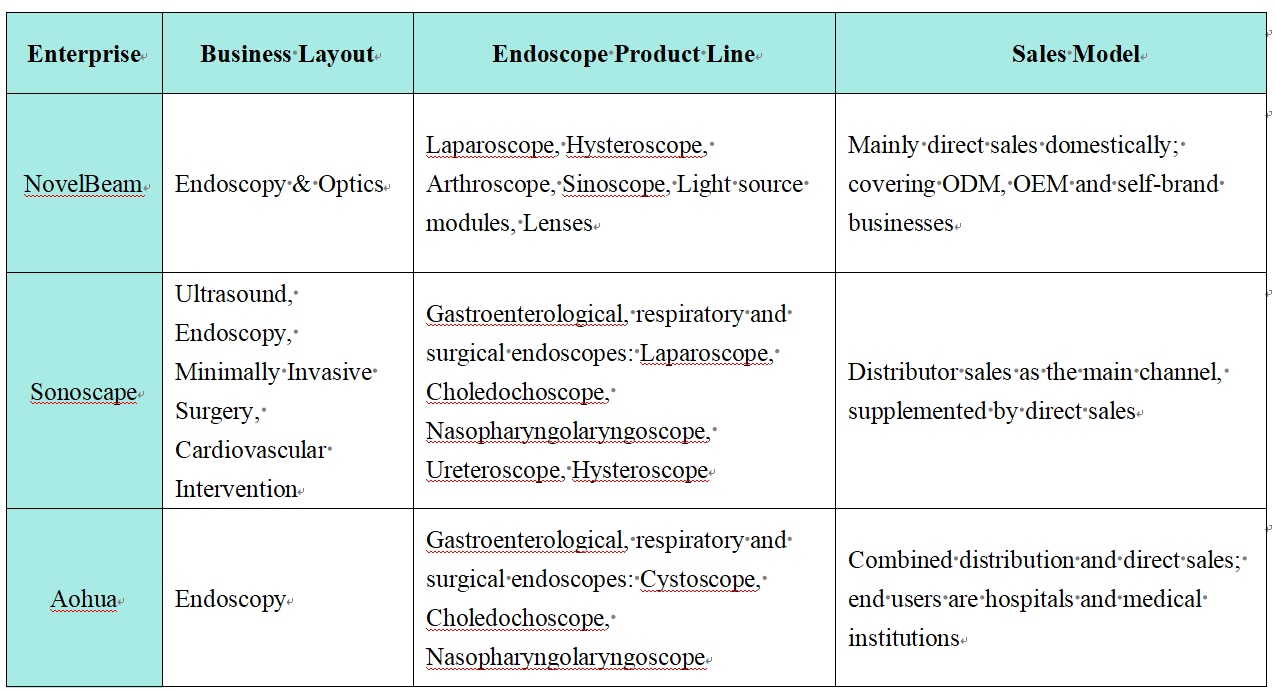
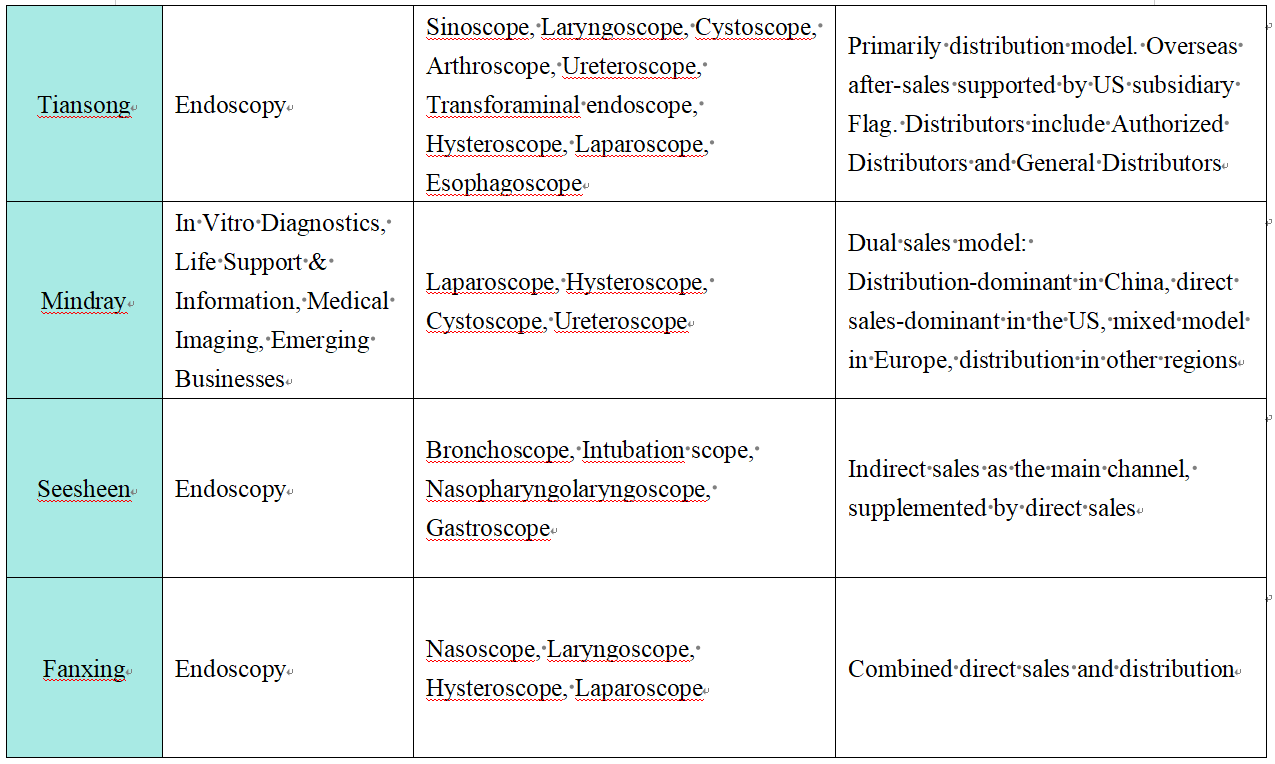
Still ranked by gross margin, this comparison shows that endoscopy gross margins are relatively high. While the market size for different endoscope types varies, company revenues differ significantly. Digestive endoscopy and laparoscopy have the largest market size, so companies with these as their primary products — Sonoscape, Aohua, and Mindray — achieve higher revenues. To grow big, one must first choose the right product portfolio.
The sales model directly impacts a company’s profit. Except for NovelBeam, most companies primarily use a distribution model supplemented by direct sales. Direct sales yield higher profits, while OEM/ODM arrangements can reduce the sales expense ratio. With many new companies entering the endoscopy market, leveraging existing scale to provide OEM services for other endoscopy companies appears to be a viable strategy to increase profits.
Expense Ratios (Sorted by Net Profit Margin)
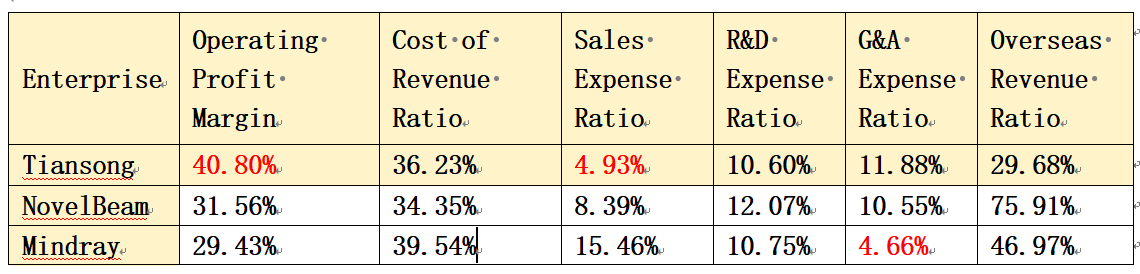
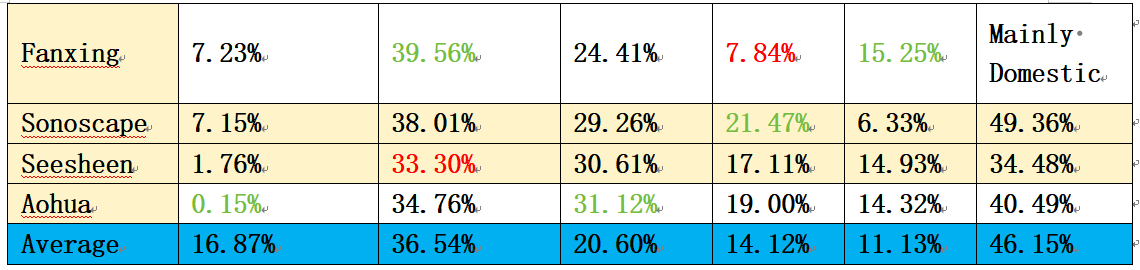
Note: Red text in the original image indicates “Optimal,” green text indicates “Suboptimal.”
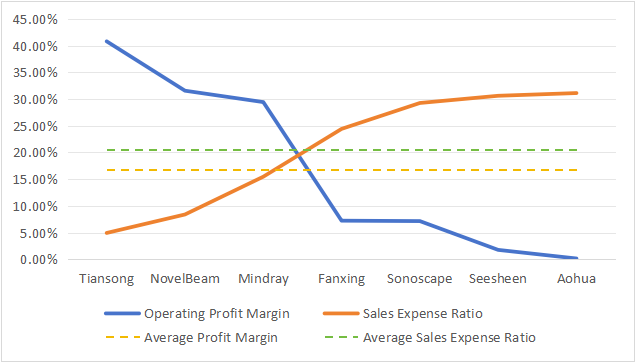
Excluding differences in sales models, the data suggests that the higher the concentration of the product portfolio, the higher the current sales expense ratio. Potential reasons include: cross-selling synergies from other product lines, increased investment by domestic companies during import substitution to drive returns, and increased investment in overseas sales.
Because the sales expense ratio has the greatest impact on profit, objective data shows that during corporate transformation or adjustment, the sales team is the first to feel the effects.
The management expense ratio reflects company size and lifecycle stage. For example, Mindray, as an industry leader in its mature stage, has a very low ratio. Smaller companies or those in decline tend to have a passively higher management expense ratio.
Revenue per Employee & Other Metrics
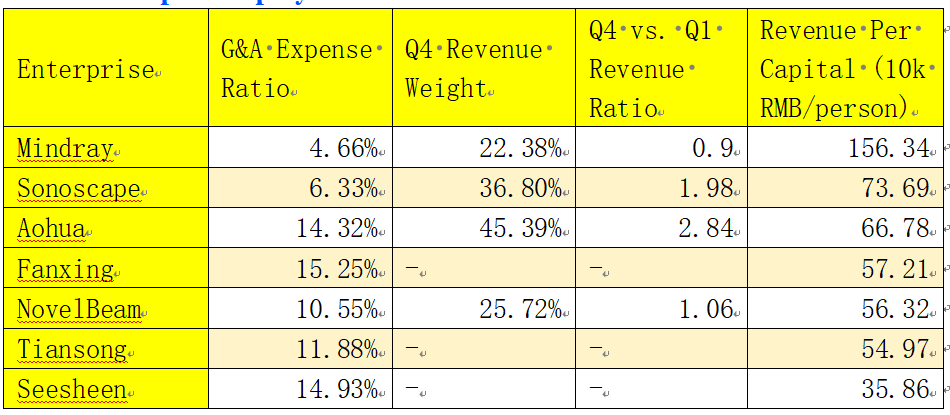
The management expense ratio seems somewhat correlated with revenue per employee, but revenue per employee is more strongly influenced by product area, brand strength, annual working hours, etc. The typical revenue per employee in the endoscopy field is approximately RMB 500,000–600,000.
Summary
Although gross margins in the endoscopy industry are high, high sales expenses erode most of the profit. The real dividing line between companies is not cost control in “developing” the product, but the efficiency and scale of “selling” it. “Niche and Profitable” versus “Broad and Comprehensive” is a false dichotomy — factors such as product area, product matrix, and market timing are all influential. Under the same sales model, the key is how to operate an efficient sales system to convert products into tangible profits.
Supplementary Perspective: Endoscopic Accessories – The Often Overlooked “Water Seller” Value
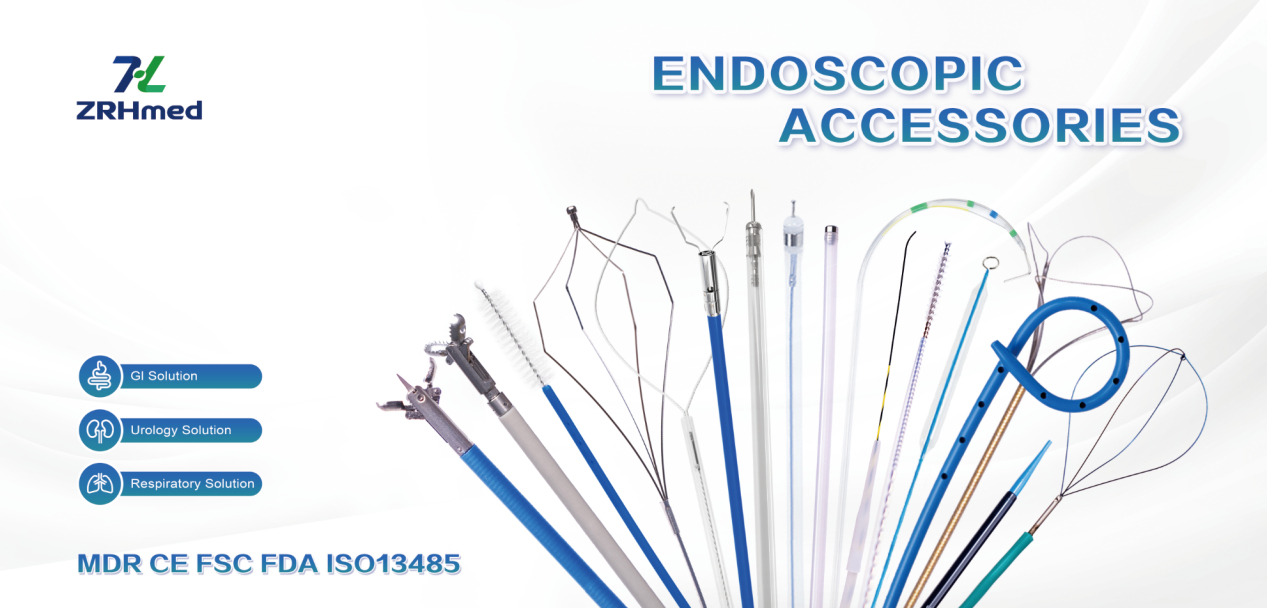
The rise of domestic endoscopy companies relies heavily on a complete supply chain ecosystem. Beyond endoscope equipment, endoscopic accessories (biopsy forceps, hemostatic clips, polypectomy snares, injection needles, cytology brushes, urological guidewires, stone retrieval baskets, suction ureteral access sheaths, etc.) are high-frequency consumables that represent a sustainable, recurring business model.
Jiangxi Zhuoruihua Medical Instrument Co., Ltd. (ZRHmed) is deeply engaged in this field. We focus on the R&D and manufacturing of endoscopic consumables. Our core product portfolio includes:
Biopsy forceps, hemostatic clips, polypectomy snares (cold/hot, rotatable), injection needles, spray catheters, cytology brushes, cleaning brushes, etc.
Guidewires, stone retrieval baskets, ureteral access sheaths (including suction type).
MDR CE certified
Exported to Europe, the Middle East, Southeast Asia, and South America
OEM/ODM ready – helping endoscope manufacturers complete their product mix
Beyond selling scopes, accessories represent a high-margin, high-repeat-purchase opportunity. We welcome domestic endoscopy OEMs to discuss partnership to better serve clinical needs together.
Email: sales@zrhmed.com
Post time: Jun-17-2026