


In 2026, the “Japanese duopoly” in the Chinese gastrointestinal endoscopy market is undergoing subtle changes. On one hand, Olympus maintains its leading position thanks to its deep technological accumulation and first-mover advantage; on the other hand, Fujifilm is closing the gap through its localization strategy and product updates. This analysis, based on market data, systematically compares the product portfolios, market performance, and competitive strategies of the two companies.
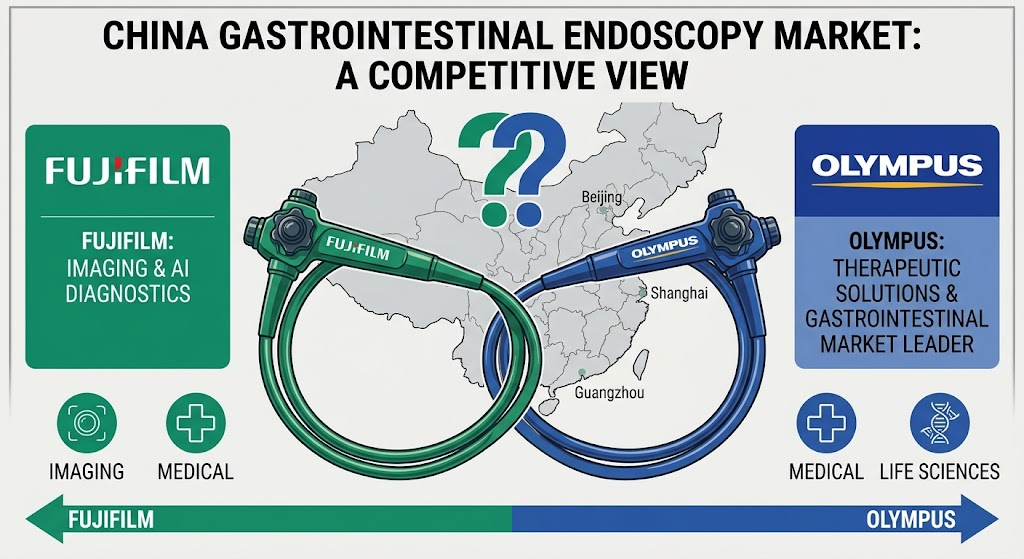
According to an industry report and data released by Zhiyan Consulting in May 2026, the Chinese gastrointestinal endoscopy market presents a competitive landscape of “foreign companies dominating, domestic companies catching up,” with the top 6 brands collectively holding over 96% of the market share.
Market share statistics only theoretically provide 100% coverage; due to differences in statistical methods, official data vary. Regardless of the statistical method used, the two Japanese brands combined hold over 65% of the market share, demonstrating the continued dominance of foreign capital.
However, looking at market share statistics for gastrointestinal endoscopy in 2025 compiled by different organizations.
The leading range fluctuates between 2 and 16 percentage points, with an average difference of 10.6%; the market size fluctuates between RMB 4.5 billion and RMB 6.4 billion.
In 2024, Olympus’ market share fluctuated between 43% and 63%, while Fuji’s was between 18% and 24%.
In the first quarter of 2026, Olympus’s market share was 39.3%, and Fuji’s was 25.8% (Shenzhen Medical Association). Of course, data from one quarter cannot be conclusive. However, it’s worth noting that Olympus’s market share in China is declining. Olympus once held a 70% share of the Chinese endoscope market, but that share has shrunk significantly. In the context of domestic substitution, “whoever loses market share the slowest” is itself a victory. The author believes that the slow pace of localization, coupled with the current economic climate making it difficult to support high budgets, are the main reasons for its declining market share.
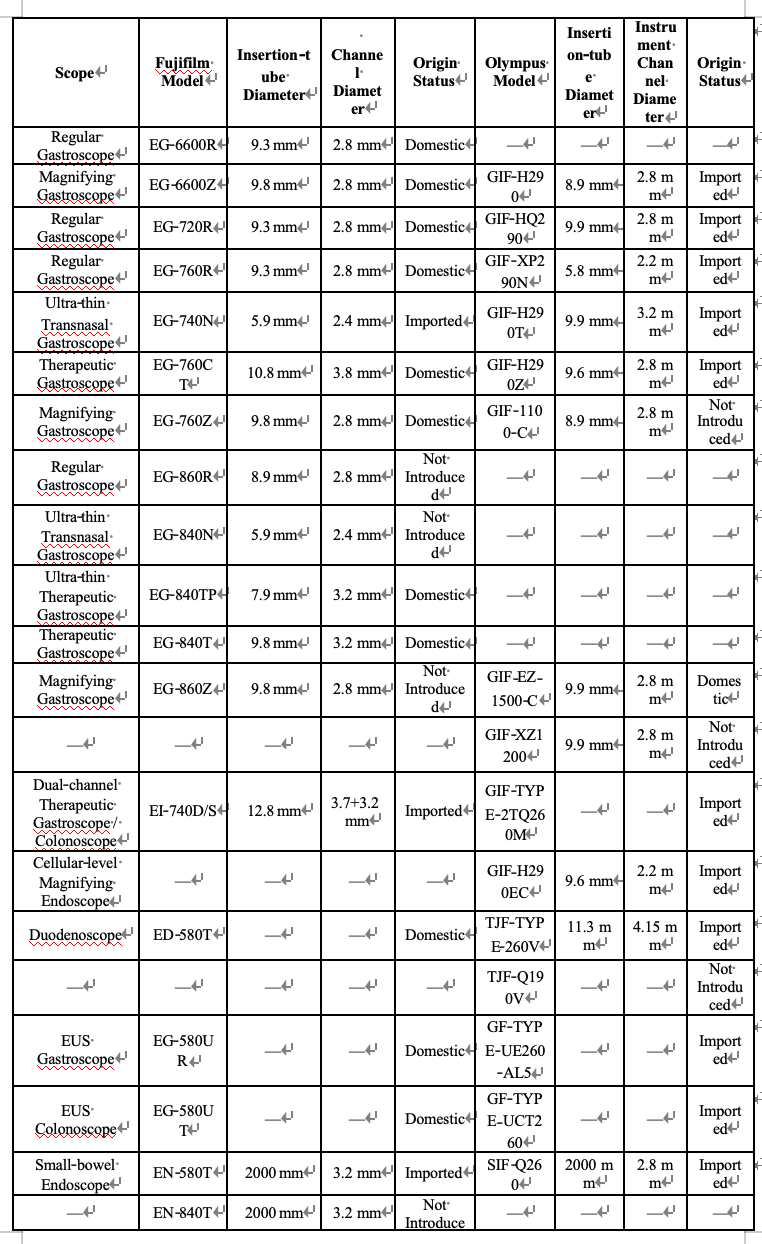
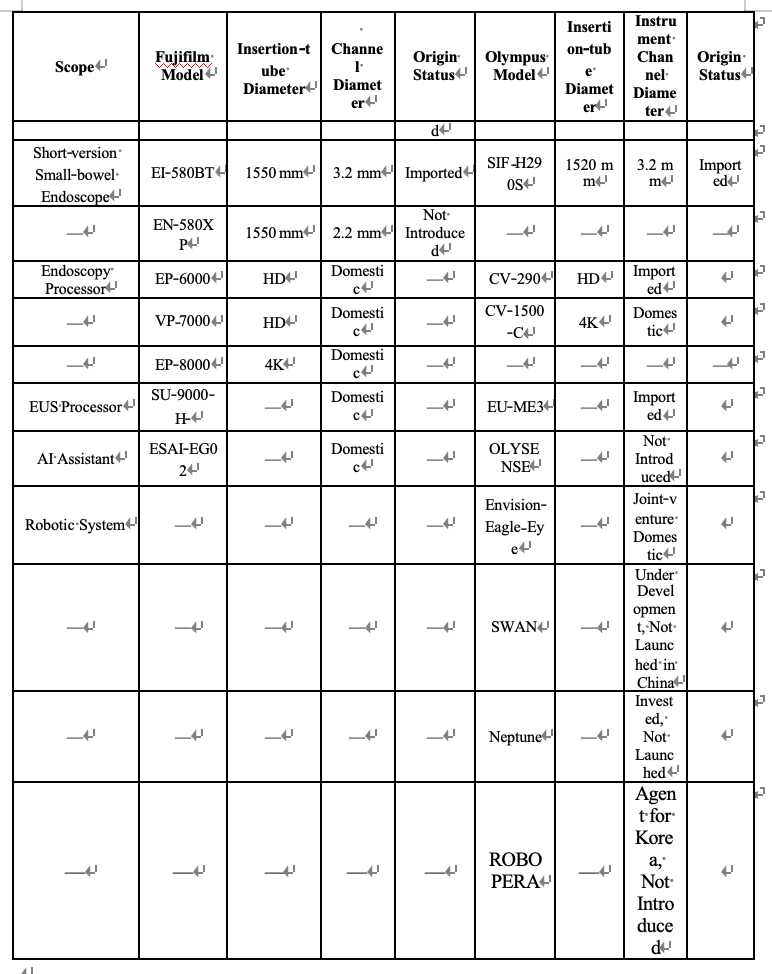
The statistics in the table above are taken from the internet. Please use them with caution, as we are not responsible for any data errors.
The flagship series of both companies represent the highest level of Japanese endoscopes currently available, but their technological directions are converging.
Both the Olympus CV-1500 and the Fuji EP-8000 are benchmarks in the current 4K gastrointestinal endoscopy field, with similar technological features, such as new dynamic range, new image enhancement, and new bleeding point illumination.
Both are arguably comparable in terms of image quality. However, opinions vary; some find one more suitable for early cancer detection, others for better inflammation detection, some prefer a brighter, more warmer tone, and still others for higher clarity.
Fujifilm’s localization efforts in China are significantly faster. Between 2023 and 2024, Fujifilm’s domestic registration certificates were successively approved, which industry insiders believe will lead to a “rise rather than fall” in 2025.
Olympus’s Catch-Up: Olympus is also accelerating its localization efforts. However, the results are only beginning to show – domestic production of one gastrointestinal endoscope, one intestinal endoscope, and one main unit. This is much slower than Fujifilm’s domestic production of three product lines + duodenoscope + endoscopic ultrasound.
If no other endoscope types are localized this year, this market share difference may continue to narrow. Currently, Fujifilm has domestically produced conventional endoscopes on the 4K platform, while Olympus has domestically produced magnifying endoscopes.
The current import certification process is not intended to deliberately highlight anyone:
2026 will be the decisive year for tertiary hospitals.
Can Fujifilm surpass Olympus in 2026? It’s very difficult.
While customer perception is slowly changing, Olympus still holds a naturally superior position in the minds of users in terms of technology, giving it a long buffer.
Many factors determine a sale, including brand identity, product, market, and after-sales service.
Strictly speaking, Fujifilm’s “localization first” strategy bought it a window of opportunity, but Olympus’s technological foundation and brand moat remain strong. Olympus is building momentum, while Fujifilm is pushing forward. If its registration certificate status remains the same this year, it’s hard to say what will happen this year, and I can’t even imagine what will happen next year.
What do you think?
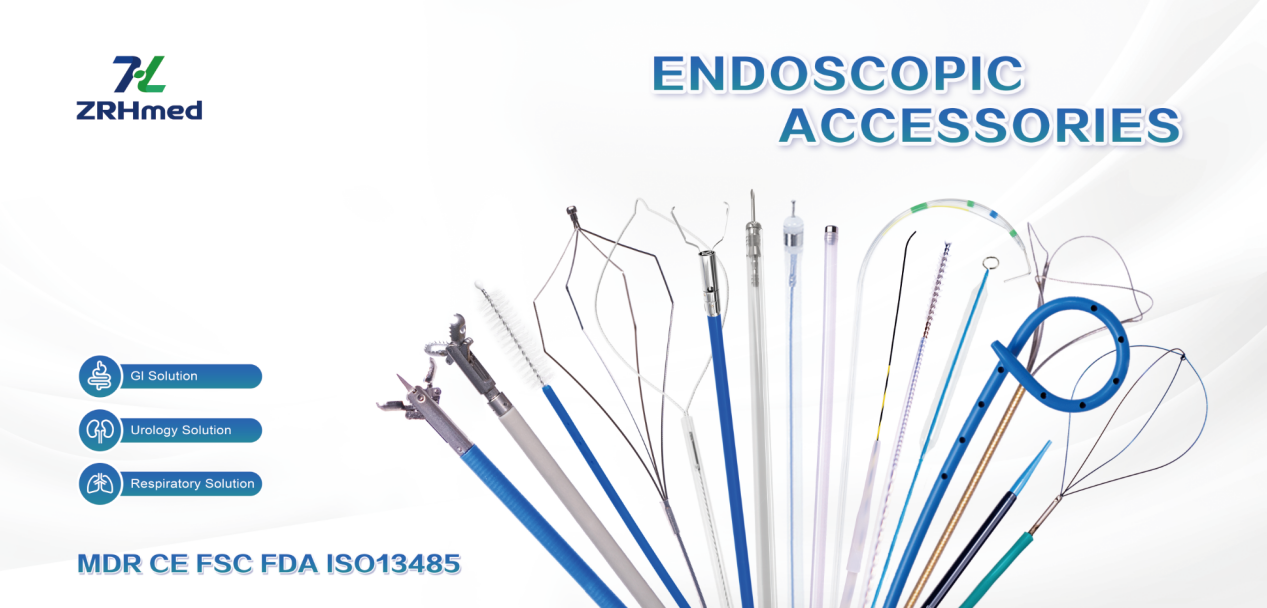
The battle for equipment market share is intense, yet the real clinical performance also hinges on the quality of accessories. By 2025, China’s endoscopic accessories market had already grown considerably, with a projected CAGR of 7.5% through 2032. In this wave of domestic substitution, ZRHmed (Jiangxi Zhuorui Medical) has emerged as a professional manufacturer offering a full range of endoscopic consumables – from biopsy forceps, hemostatic clips, and polypectomy snares to sclerotherapy needles, stone retrieval baskets, guidewires, and nasal biliary drainage catheters. Its core products are MDR CE certified and exported to over 30 countries. Against the backdrop of cost containment and localisation, ZRHmed provides a high value, comprehensively compatible, and full service alternative to imported accessories.
Post time: Aug-19-2026