


A few days ago, Hangzhou AGS released its 2026 Semi-Annual Report. Against the backdrop of booming gastroscopy & colonoscopy businesses and the centralized volume-based procurement (VBP) for digestive interventional medical consumables, let’s analyze the transformations taking place at this enterprise.
In H1 2026, AGS posted operating revenue of 302 million yuan (precise figure: 301.6 million yuan), representing a slight year-on-year decline of 0.28%. Net profit attributable to parent shareholders reached 118 million yuan, down 6.27% year-on-year. Revenue remained roughly flat, while profits slipped moderately.
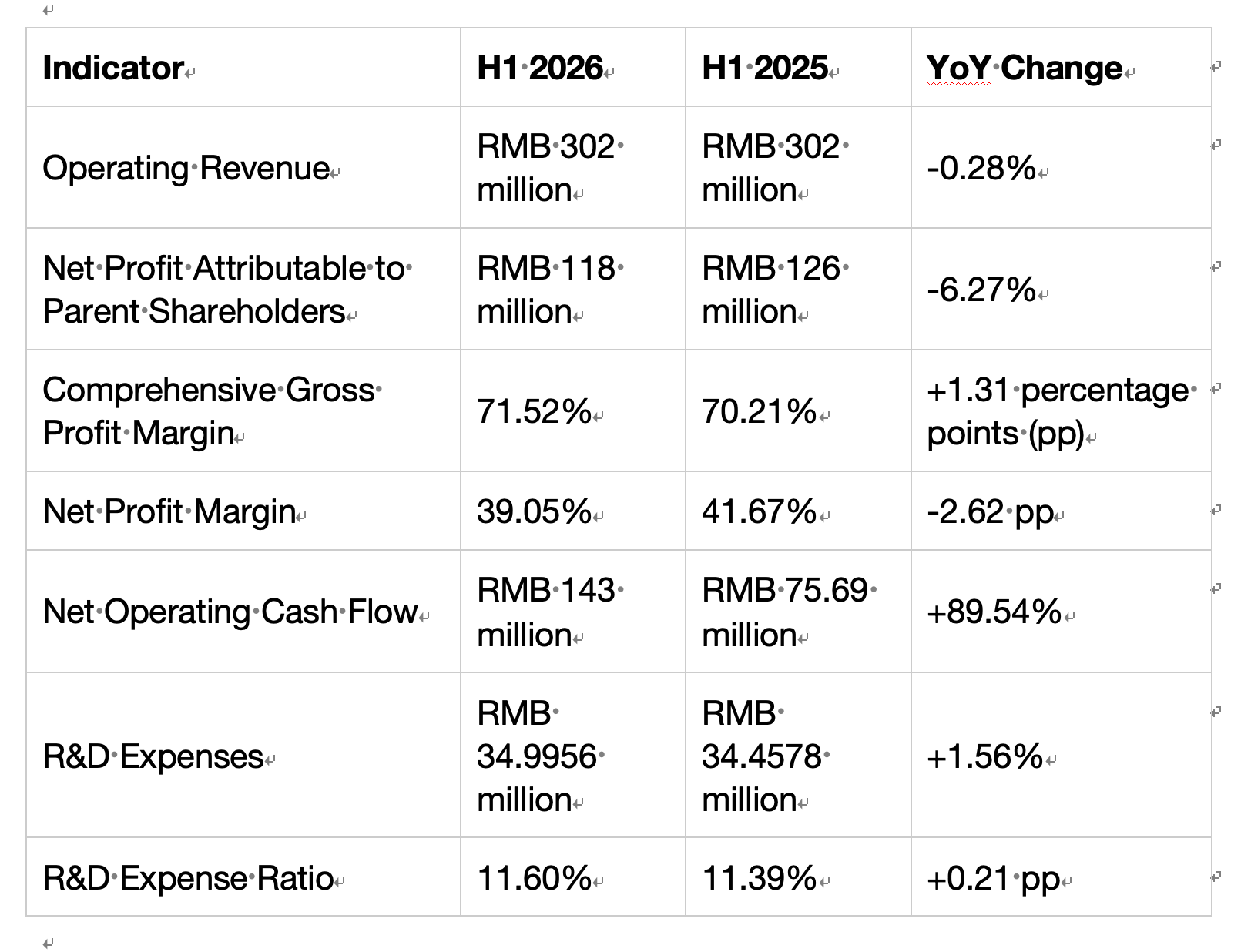
Amid dual pressures of price cuts under volume-based procurement (VBP) and tariff impacts, the gross profit margin improved rather than declining, which proves that cost reduction and efficiency improvement initiatives in manufacturing, supply chain and financial management have delivered tangible results.
Selling expenses increased by 5.95% and administrative expenses rose by 10.19%. Finance expenses turned from negative to positive, mainly driven by higher depreciation and amortization expenses as well as rising staff salaries at the Thailand subsidiary, plus an exchange loss of RMB 9.118 million caused by the depreciation of the US dollar exchange rate (the corresponding figure was negligible in the same period last year).
We analyze AGS’s domestic and overseas revenue breakdown separately based on its 2026 semi-annual report.
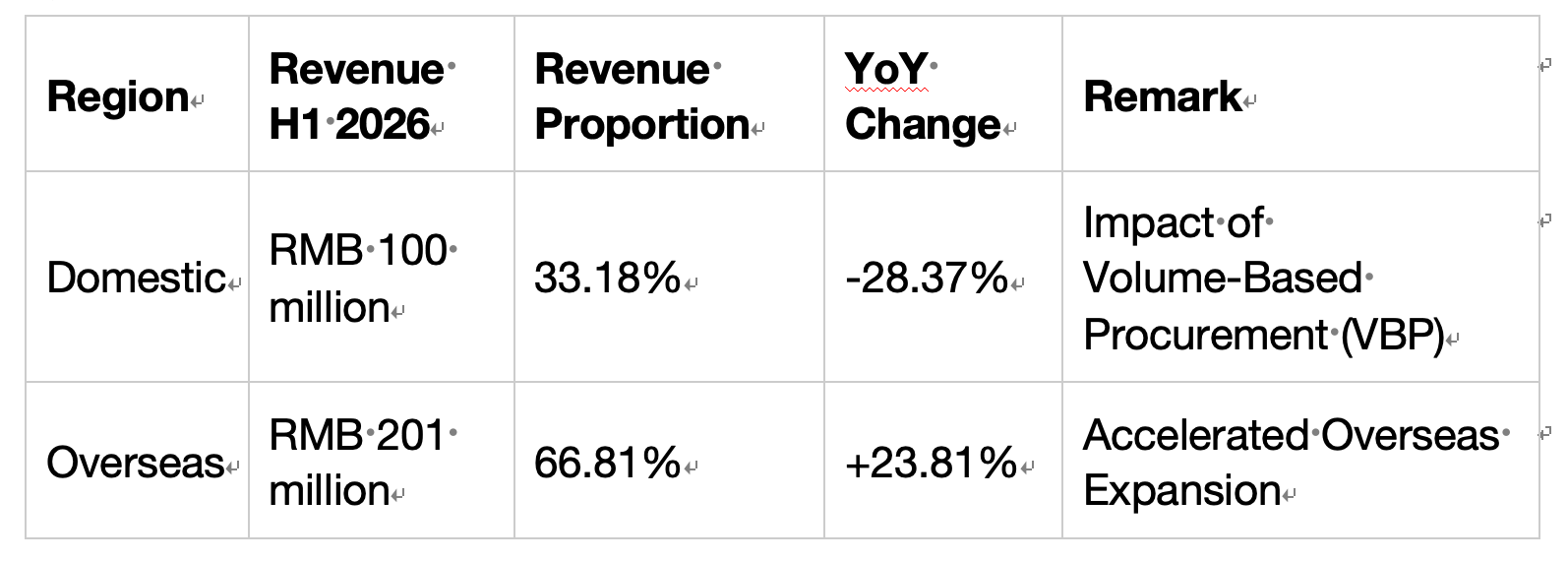
Domestic revenue plummeted by 28.37%, while overseas revenue surged 23.81%. The contraction and growth largely offset each other, which explains the mere 0.28% year-on-year dip in total operating revenue.
The semi-annual report stated clearly that the slump stemmed from the national medical insurance volume-based procurement (VBP) policy. Worse yet, this downward pressure will persist: in July 2026, the National Healthcare Security Administration officially launched the 7th national centralized procurement program for medical consumables, covering nearly the full spectrum of digestive medical supplies. This means AGS’s core GI products such as hemostatic clips are about to face nationwide price cuts.
Regional data extracted from investor communication minutes shows robust growth across North America, Asia-Pacific and Oceania. The company has secured a total of 153 contracted overseas clients, with 11 new clients added during the reporting period.
More importantly, its proprietary brand business delivered outstanding performance: overseas proprietary brand revenue jumped 45.84% year-on-year in H1 2026, accounting for over one-third of total overseas revenue. This demonstrates AGS’s ongoing transformation from ODM private-label manufacturing to independent brand operation, lifting the ceiling for its gross profit margin and pricing power.
Registration certificates further back this momentum: the company obtained 45 product approvals in the first half of the year, 44 of which were overseas registrations.
Overseas revenue as a proportion of total revenue surged from roughly 53.8% in the same period last year to 66.81%, marking a fundamental structural shift. If domestic business faces further headwinds following the rollout of national VBP while overseas revenue maintains a growth rate above 20%, the full-year overseas revenue proportion will easily exceed 70%.
Let’s break down the company’s product lines. AGS’s products are categorized by clinical application into GI series, EMR/ESD series, ERCP series and equipment series.
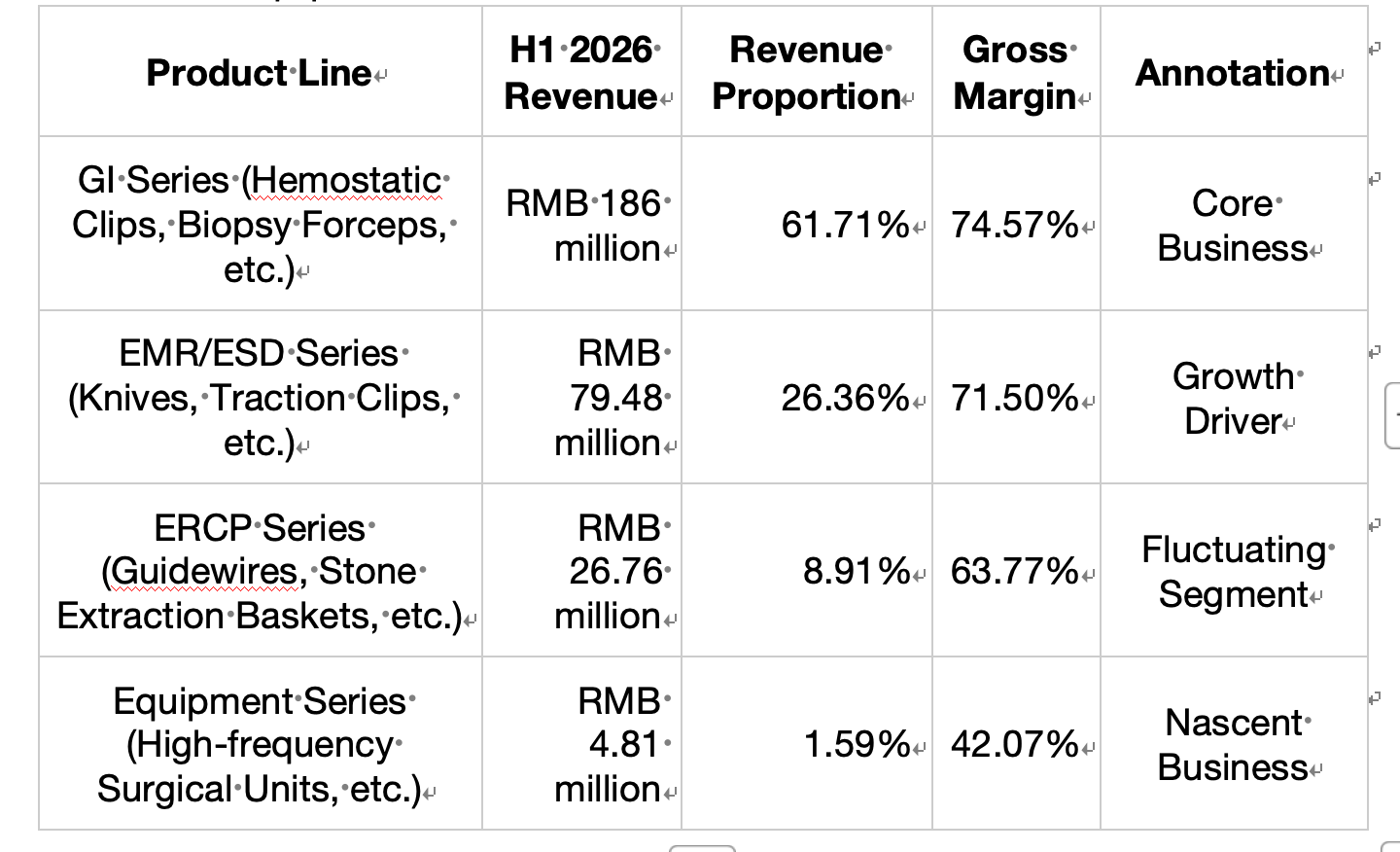
GI products remain the absolute core business, accounting for over 60% of total revenue with a gross profit margin of 74.57%.
ESD series stands as the company’s key breakthrough growth track. In the first half of the year, the company obtained registration approvals for monopolar and bipolar electrosurgical knives. Combined with traction clips and third-generation water pumps, it has formed a complete procedural solution for ESD operations.
The company’s proprietary bipolar circuit technology serves as its differentiated competitive advantage: the dispersive electrode (neutral plate) is integrated into the transparent cap, which redirects current from the original longitudinal penetration pattern to horizontal flow along the mucosal surface.
As for the ERCP segment, balloon dilation catheters have received regulatory approval, further enriching the product portfolio.
It is worth noting that all three core product lines (GI, EMR/ESD, ERCP) will be subject to national volume-based procurement (VBP) policies in the future.
This segment is the core focus of our analysis and the key highlight of AGS’s strategic transformation from a pure consumables manufacturer to an integrated enterprise offering both equipment and disposable accessories.
Hang’an Medical, the company’s holding subsidiary with a 95.83% equity stake, undertakes the development of four major equipment R&D pipelines:
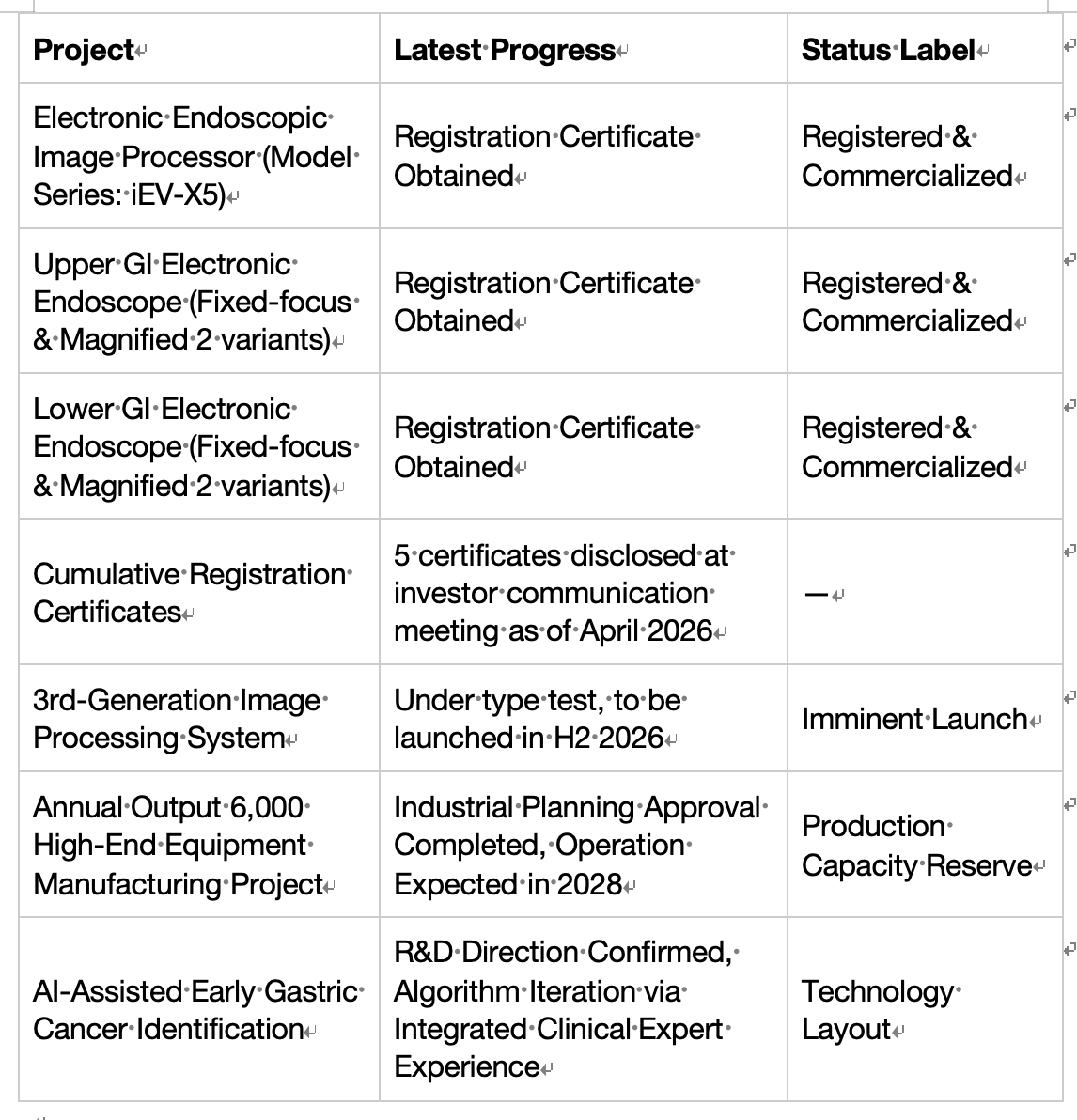
Based on industry observations, competition in reusable gastrointestinal endoscopes will intensify sharply. AGS has laid out endoscope equipment and can share its existing customer base. We have inspected physical prototypes in addition to complete registration approvals, proving this is not merely a conceptual story.
The company clearly stated during investor communications that it targets endoscopes embedded with AI-assisted diagnosis and early cancer identification as its primary R&D direction. From an industry perspective, AI functions will become standard configuration for gastrointestinal endoscopy systems in the future.
The company plans to officially launch and sell its gastrointestinal endoscopes in H2 2026. Its go-to-market strategy prioritizes the domestic market before gradual overseas expansion.
The high-end medical equipment project with an annual output of 6,000 sets has obtained full industrial planning approval and is scheduled to go online in 2028. Meanwhile, the Thailand manufacturing plant, slated for commissioning in H1 2027, will act as supplementary overseas production capacity to fulfill global orders.
The total planned investment for the surgical robot project stands at RMB 10 million, of which RMB 8.66 million has already been disbursed. The project has entered the animal testing phase in accordance with ISO 10993 biological evaluation standards.
The number of R&D personnel declined while total compensation increased significantly.
The headcount of R&D staff fell from 187 to 161, compared with 127 in the same period two years ago. The reduction mainly involves employees under 30 years old. The average remuneration rose from RMB 119,600 to RMB 164,400.
The 161-member R&D team is advancing multiple pipelines in parallel, including flexible endoscopes, surgical robots, energy platforms, GI, ESD and ERCP product lines.
AGS is undergoing a structural transformation: shifting from an enterprise focused on endoscopic consumables and ODM export business to an integrated player centered on overseas proprietary brands with both consumables and equipment offerings.This transformation comes with growing pains. Domestic revenue plunged by 28%, equity incentive plans encountered successive setbacks, and operating expenses face phased pressure. Nevertheless, substantially improved cash flow, counter-trend rising gross profit margin, and newly obtained registration certificates for reusable gastrointestinal endoscopes slated for imminent launch signal that fundamentals are not deteriorating; the company is proactively shifting its growth gears.As for whether its reusable gastrointestinal endoscopes can secure a prominent market share, AGS is among the third batch of domestic companies entering this track. We will wait and see the final outcomes.
All financial data contained in this article are sourced from AGS’s 2026 Semi-Annual Report (174 pages, disclosed on the Shanghai Stock Exchange) and the Investor Relations Activity Record dated August 10, 2026. This article is for industry analysis reference only and shall not constitute investment advice.
By analyzing the latest financial data and strategic moves of leading players like AGS, we gain a clear view of where the endoscopic consumables market is heading. And importantly, we see that the growing global recognition of Chinese GI and urology consumables is not just benefiting the top-tier manufacturers—it is also creating opportunities for all of us who are part of this ecosystem.
As a specialized manufacturer within the same industry, ZRHmed is both a contributor to and a beneficiary of this broader trend. When overseas distributors become more open to Chinese-made endoscopic consumables, it is a rising tide that lifts all boats—provided you have the right partner.
That is where we come in.
If you are currently distributing AGS products as a second-tier distributor, you already know their products have strong market acceptance.
But here is the question: how much of the profit margin is being shared between layers before the products reach you?
With ZRHmed, you are not buying from a distributor—you are buying directly from the manufacturer. That means:
In short: you get the same quality standard and regulatory compliance you expect from top-tier brands, but with a pricing structure that leaves room for you to grow.
You don’t need to compete with the leaders. You just need a smarter partner.
Why choose ZRHmed?
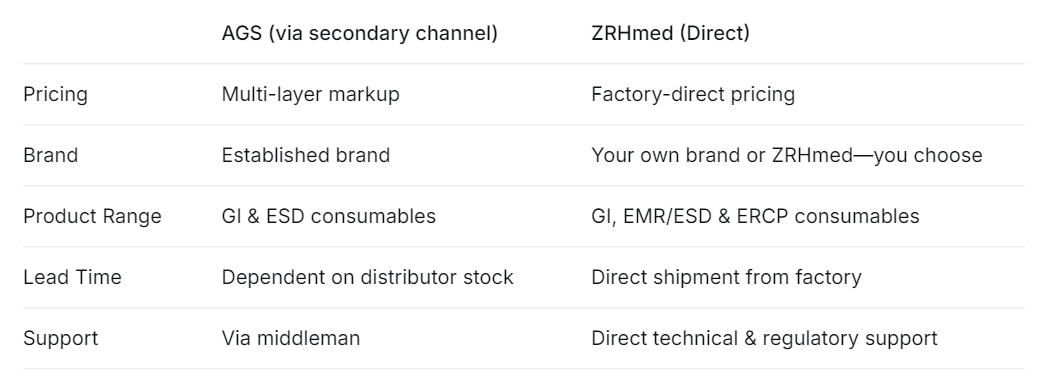
If you are already selling endoscopic consumables in your market, adding ZRHmed to your portfolio costs you nothing—but it adds profit margin to every order.
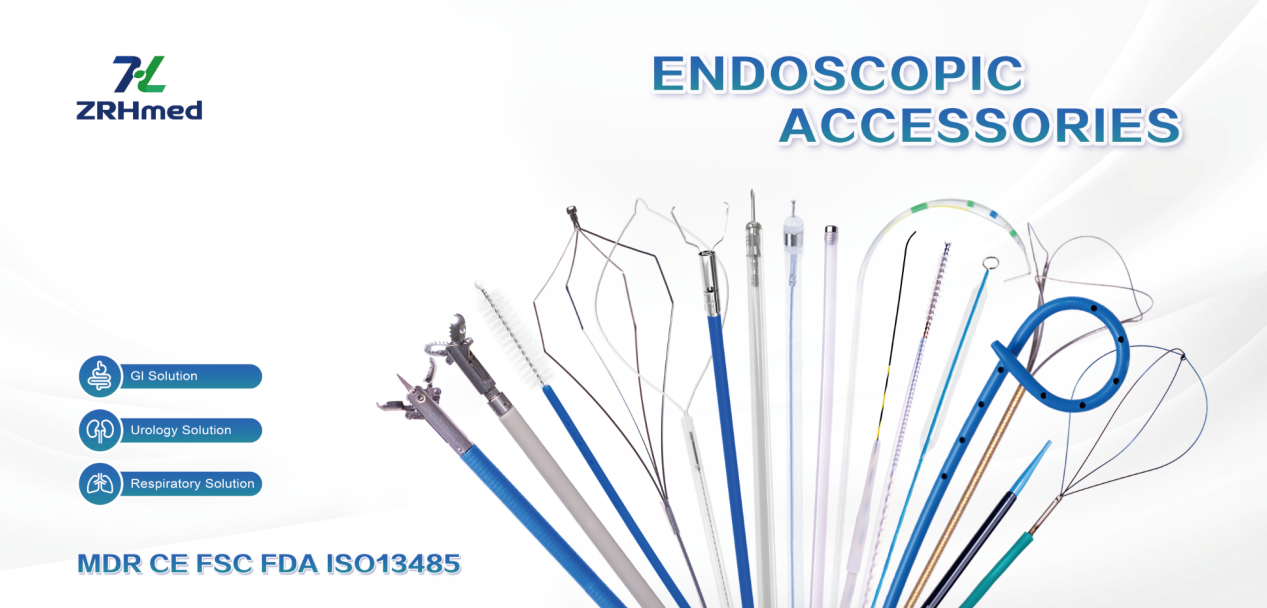
ZRHmed is a Chinese manufacturer of endoscopic accessories, including Biopsy Forceps, Hemostatic Clips, Polypectomy Snares, Sclerotherapy Needles, Spray Catheter, Cytology Brushes, Guidewire, Stone Retrieval Basket, Nasal Biliary Drainage Cathete etc. Our core products are MDR CE certified and used by distributors and healthcare providers worldwide.
Post time: Aug-19-2026