

Many diseases hide in places invisible to the naked eye.
Stomach and colorectal cancers are the most common malignant tumors of the digestive tract. Early detection and timely treatment can significantly reduce the risk of death. How do doctors detect these “deeply hidden” early-stage cancers? The answer is—gastrointestinal endoscopy.
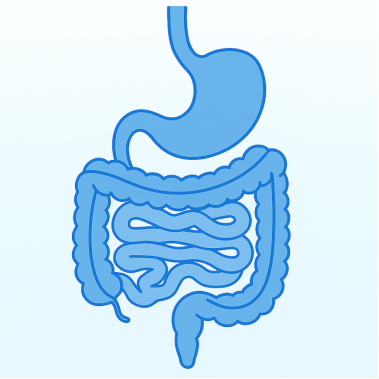
Gastrointestinal Anatomy Diagram
A digestive endoscope is a flexible device that can be inserted into the digestive tract through the mouth or anus, allowing doctors to directly observe the actual condition inside the body. From early rigid gastroscopes and fiber optic endoscopes to today’s electronic high-definition, magnified, and AI-assisted systems, the development of endoscopes has enabled doctors to “see more clearly and more accurately.”
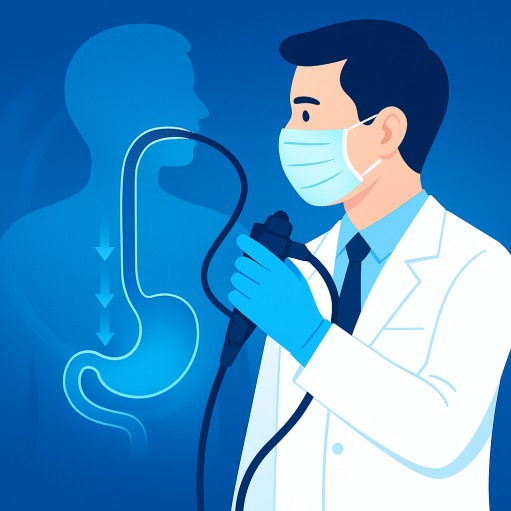
● A doctor’s eyesight relies not only on experience, but also on skill.
Modern endoscopic technology goes far beyond “observation”, it is a complete system of precise identification.
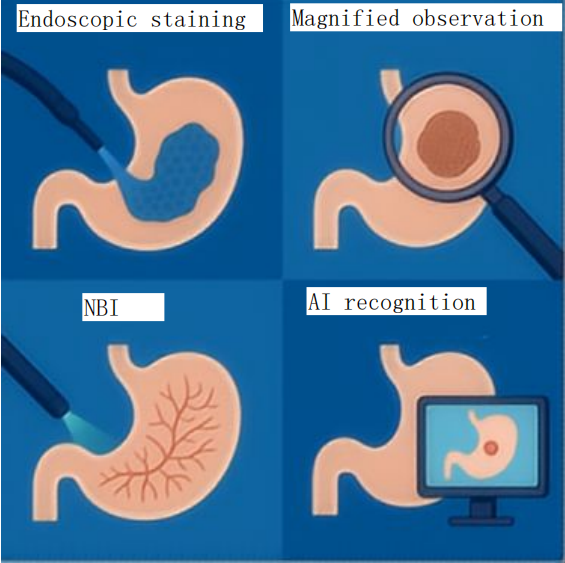
Using chromoendoscopy, doctors can use indigo carmine or acetic acid to enhance the boundaries of lesions, making abnormal tissue impossible to hide.
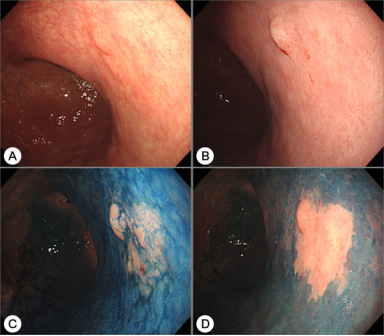
Endoscopic image stained with indigo carmine.
Magnifying endoscopy can magnify the microstructure of mucosal surfaces down to the cellular level; narrow-band imaging (NBI) uses specific wavelengths of light to highlight capillary morphology, helping to differentiate between benign and malignant tumors; and artificial intelligence (AI) recognition technology can automatically mark suspicious areas in images, significantly improving the early cancer detection rate.
These methods allow doctors to “read” lesions with technology, rather than relying solely on visual inspection. As a result, more and more early cancers are being detected at minute intervals.
● From diagnosis to treatment, everything can be done with a single microscope.
Endoscopy is no longer just a tool for “seeing the doctor,” but also a means of “treating the doctor.”
Doctors can perform a variety of precise procedures under endoscopy: quickly stop bleeding through electrocoagulation, clamping, or spraying medication; completely remove polyps and early-stage cancers using ESD (endoscopic submucosal dissection) or EMR (endoscopic mucosal resection); for patients with gastrointestinal tract strictures, stent placement or balloon dilation can be performed; and even swallowed foreign objects can be removed.
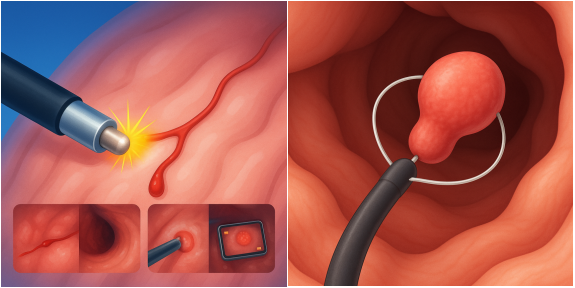
Endoscopic polyp removal and hemostasis techniques
Compared to traditional surgery, these treatments are less invasive, have a faster recovery time, and most patients can resolve their issues without incisions. For many elderly patients or those with underlying medical conditions, endoscopic treatment undoubtedly offers a safer and more feasible option.
● Higher resolution and greater precision transform inspection into protection.
With the continuous development of high-resolution imaging, AI algorithms, and sophisticated operating systems, endoscopy is moving towards an integrated approach of “early diagnosis and precision treatment.” Future examinations will be more comfortable, with higher image quality, more intelligent operation, and doctors will be able to more comprehensively assess the health of the mucosa.
The role of digestive endoscopy in the prevention and treatment system is also expanding—from simple diagnosis to postoperative follow-up, recurrence monitoring, and lesion tracking; it is becoming an important component of digestive tract disease management.
It can be said that digestive endoscopy not only helps doctors discover problems but also helps patients prevent disease progression, making it a crucial link in safeguarding digestive health.
Friendly Reminder:
Regular gastroscopy and colonoscopy can help detect early lesions and prevent cancer.
For individuals with a family history, Helicobacter pylori infection, chronic gastritis, or a history of polyps, regular checkups are recommended as advised by your doctor.
People over 40 years of age are advised to undergo gastroscopy and colonoscopy screening every 2–3 years.
A well-planned endoscopy examination may be a crucial step in preventing serious diseases.
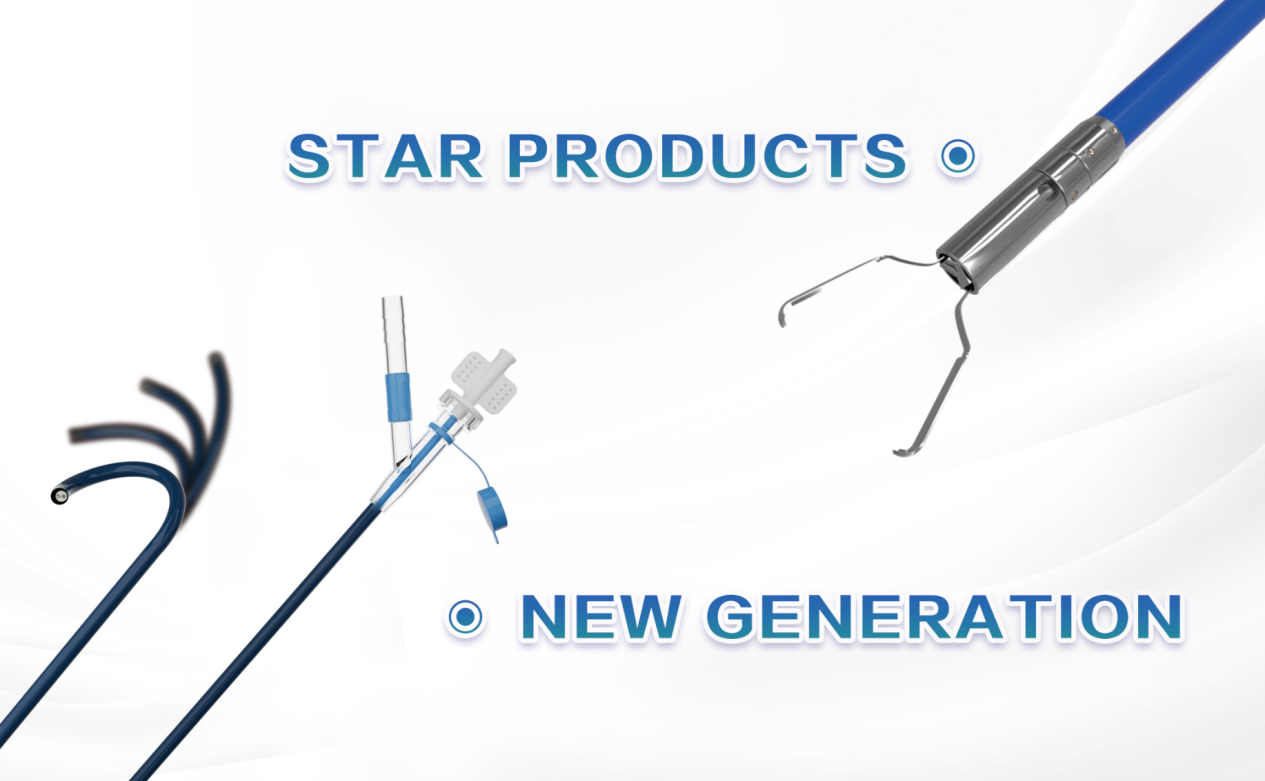
We, Jiangxi Zhuoruihua Medical Instrument Co.,Ltd., is a manufacturer in China specializing in the endoscopic consumables, include GI line such as biopsy forceps, hemoclip, polyp snare, sclerotherapy needle, spray catheter, cytology brushes, guidewire, stone retrieval basket, nasal biliary drainage cathete etc. which are widely used in EMR, ESD, ERCP. And Urology Line, such as ureteral access sheath and ureteral access sheath with suction, disposable Urinary Stone Retrieval Basket, and urology guidewire etc.
Our products are CE certified, and our plants are ISO certified. Our goods have been exported to Europe, North America, Middle East and part of Asia, and widely obtains the customer of the recognition and praise!
Post time: Jan-06-2026