


Hello everyone. In the first half of 2026, China’s endoscope industry achieved a historic leap from trade deficit to trade surplus.
Total exports reached approximately RMB 2.456 billion (+23.79 % YoY), while total imports stood at around RMB 1.396 billion(‑48.72 % YoY), yielding a trade surplus of RMB 1.060 billion. By contrast, in H1 2025 — just twelve months earlier — the industry recorded a trade deficit of RMB 738 million. Within merely 12 months, the trade balance improved by RMB 1.798 billion.
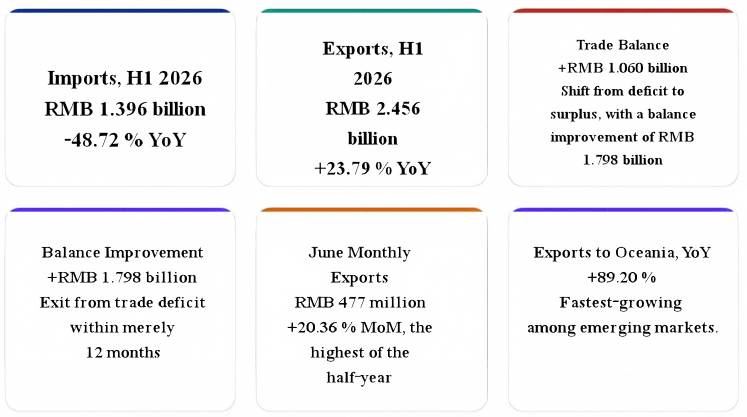
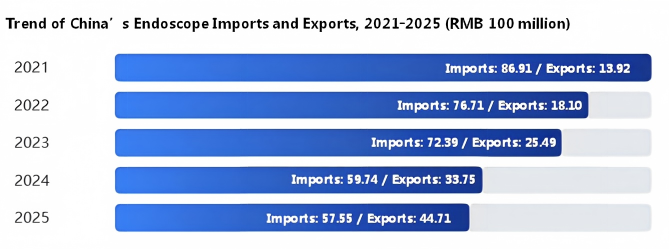
Five year review: Cumulative imports fell by 33.8% (annualized rate: approx. 9.9%), cumulative exports rose by 221.2% (annualized rate: approx. +33.8%), and the trade deficit shrank by 82.4%. Exports in H1 2026 reached RMB 2.456 billion, surpassing the H1 2025 figure of RMB 1.984 billion; imports stood at RMB 1.396 billion, dropping to half of the H1 2025 level of RMB 2.721 billion.
Behind this shift lies the rapid penetration of domestic flexible and rigid endoscope manufacturers in mid‑ and low‑end markets, alongside repeated market gains for high‑end endoscopes. It also represents breakthroughs in the localization of key supply‑chain links, as well as sustained investment by domestic manufacturers in overseas registration, channel development and own‑brand building.
In sharp contrast to the highly concentrated import structure, exports feature a sound pattern of ”diversified markets, balanced regional distribution and varied product categories”. Europe ranks as the largest market, while Oceania registers the fastest growth.
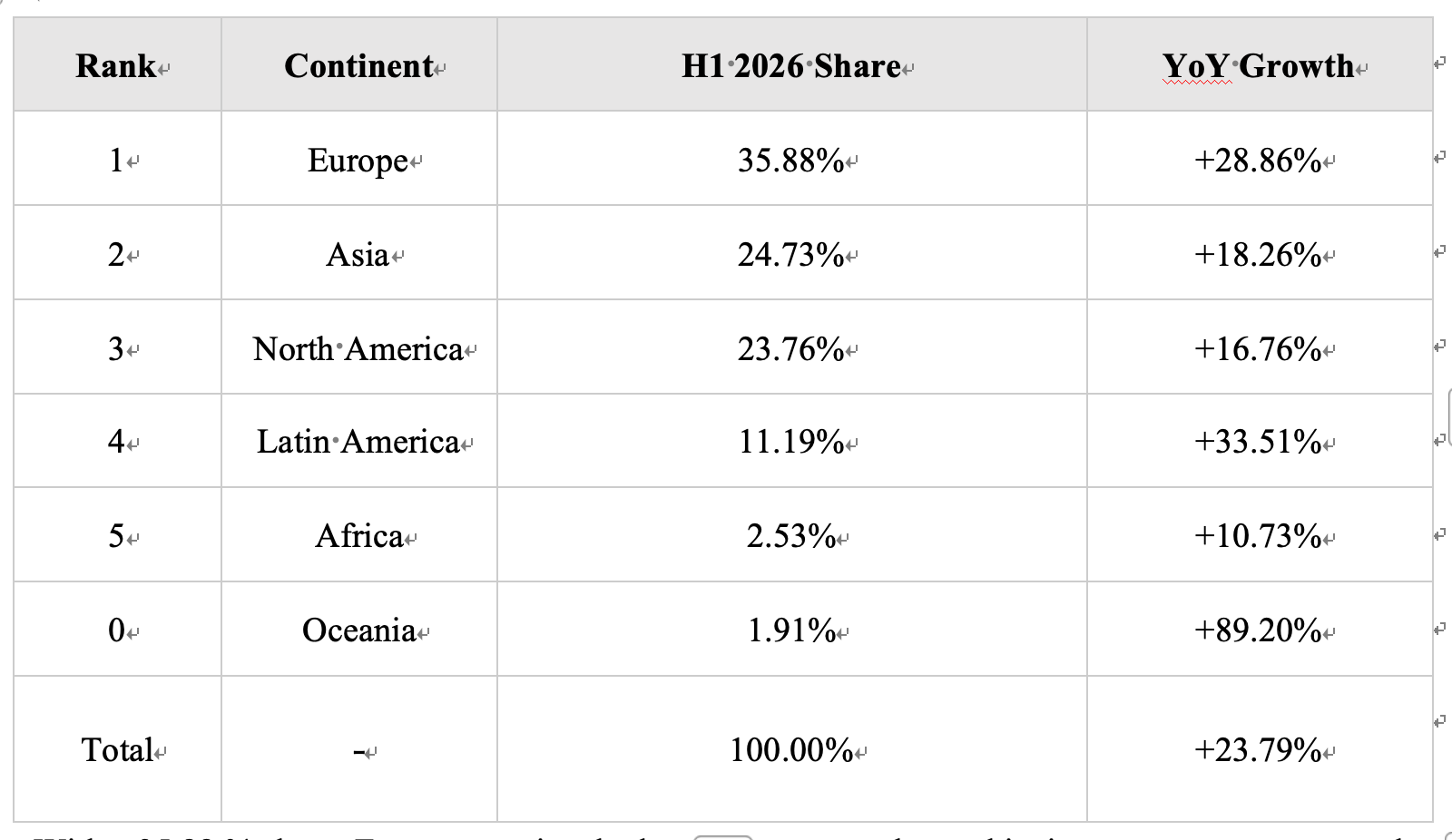
With a 35.88 % share, Europe remains the largest export market, achieving a year‑on‑year growth rate of 28.86 % and contributing 41.8 % of total export increment. Latin America posted +33.51 % YoY growth and Oceania surged by +89.20 %. Driven by low base effects, both markets demonstrate high growth elasticity, reflecting the rapidly unleashed demand for cost‑effective products across emerging markets.
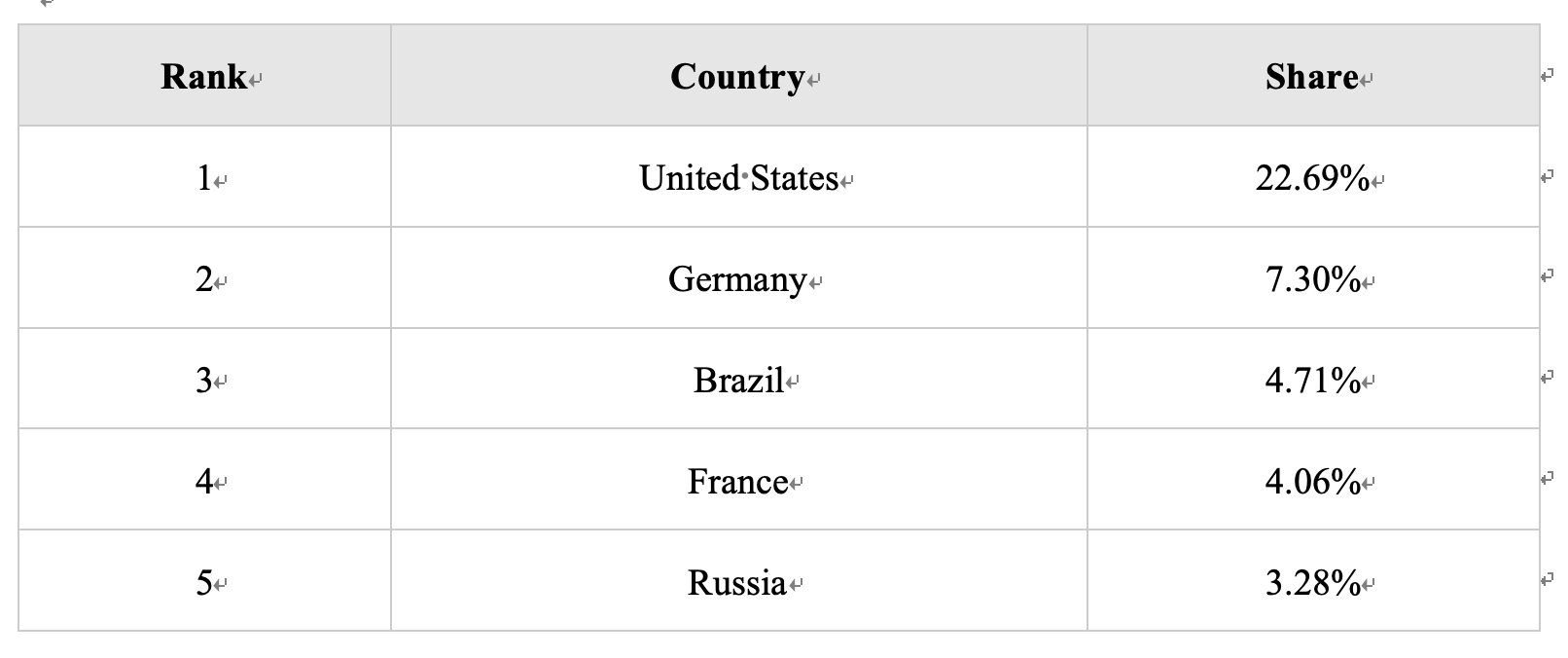
The combined share of the Top‑5 export destination countries stands at merely 42.04 %, implying that the remaining 57.96 % is dispersed across dozens of nations. This “diversified structure with low concentration” delivers strong risk‑resilience; fluctuations in demand from any single market are unlikely to impact overall business performance.
The geographical distribution of import data reveals the reality that high‑end segments within China’s endoscope industrial chain remain subject to overseas bottlenecks.
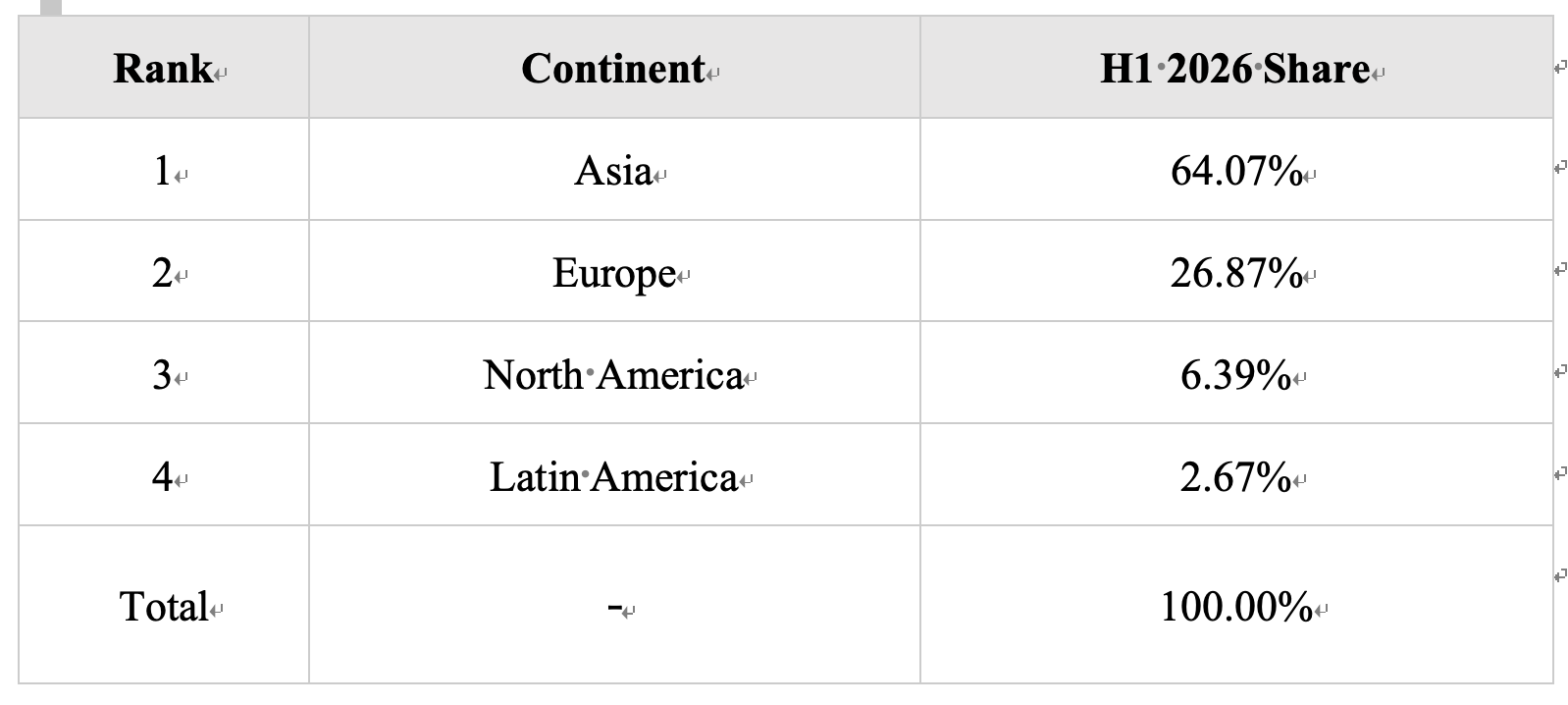
Asia dominates imports with a 64.07 % share, while Europe accounts for 26.87 %; together they make up 90.94 % of total imports. Endoscope exports to China from Africa and Oceania are negligible, which is consistent with the global industrial landscape of the medical device industry.
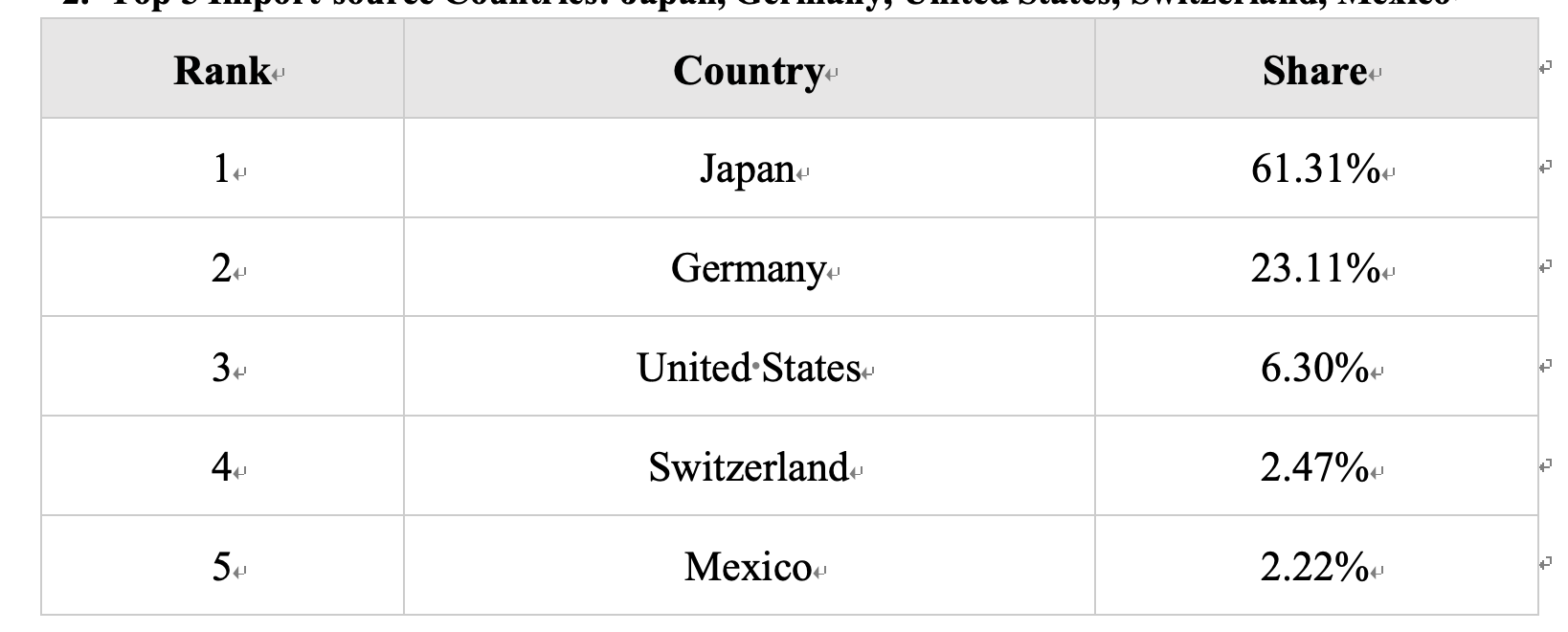
The combined share of the Top‑5 import‑source countries reaches 95.41 %, with Japan alone accounting for 61.31 %. This indicates that China’s endoscope imports, covering fields such as “high‑end flexible endoscopes, electronic endoscopes, and even 4K/3D endoscopes”, still exhibit deep reliance on Japanese brands (Olympus, Fujifilm, Pentax, etc.).
The import and export trade of endoscopes vividly depicts the regional industrial landscape of China’s medical device sector.
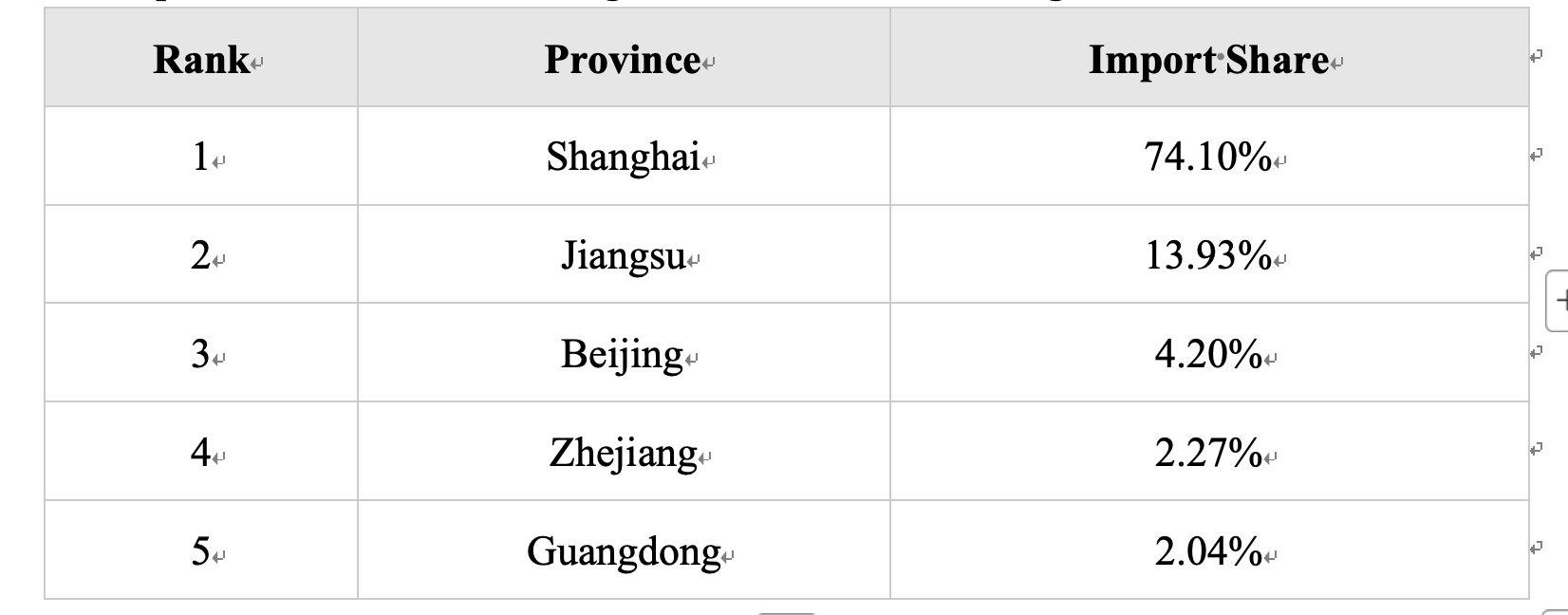
The Yangtze River Delta holds a dominant position: Shanghai, Jiangsu and Zhejiang together account for 90.30 % of total imports. As a single city, Shanghai captures 74 % of national import share, which essentially stems from the combination of its triple roles: customs clearance port, regional headquarters of multinational medical device enterprises, and national distribution center.
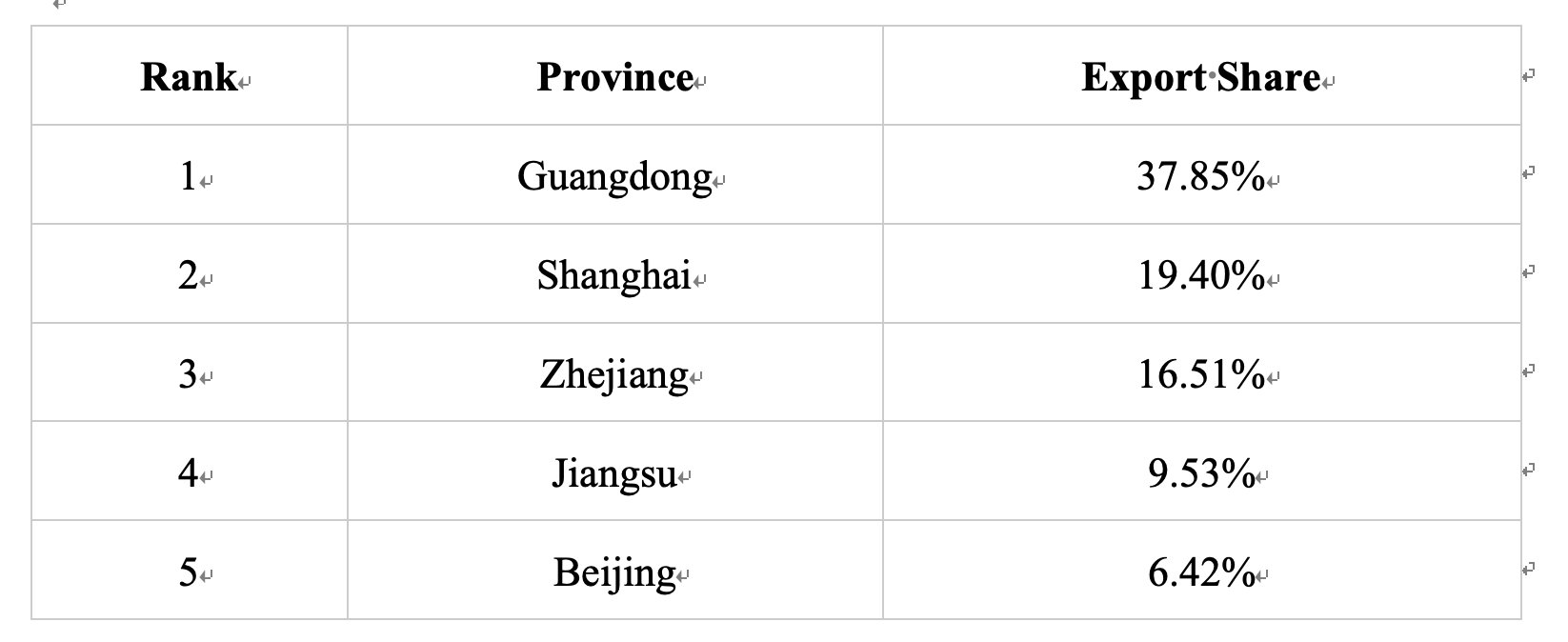
In short, consistent with current industry realities, China’s endoscope manufacturing has formed an industrial pattern of coastal manufacturing clusters plus inland R‑D hubs.
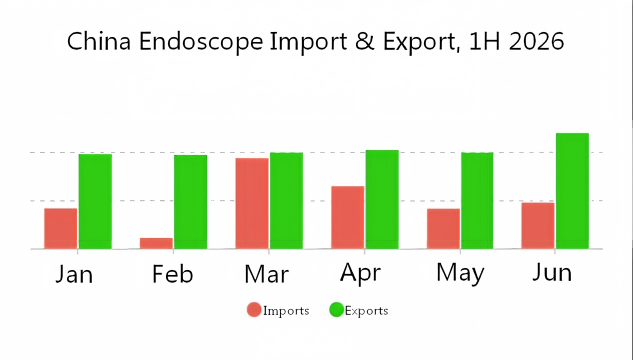
The true significance of 1H 2026: The “scissors gap” in China’s endoscope industry has crossed over. Driven by a 23.79 % year‑on‑year increase in exports and a 48.72 % year‑on‑year decline in imports, a differential of RMB 1.798 billion has been created within merely 12 months. If monthly exports can stay above RMB 400 million in the second half‑year, China is expected to register its first‑ever annual trade surplus for endoscopes in 2026.
The historic turnaround from a RMB 738 million deficit to a RMB 1.06 billion surplus in just 12 months did not happen overnight-. Behind these numbers lies the collective effort of China’s entire endoscope industrial chain – not only equipment manufacturers, but also the supporting ecosystem of endoscopic accessories that enable every procedure.
According to industry estimates, the global endoscopic accessories market is projected to reach USD 7.4 billion by 2026, with China’s market growing at a CAGR of approximately 7.5% through 2032-. This growth is driven by the expanding screening programs for digestive diseases, the increasing adoption of minimally invasive techniques, and the accelerating shift toward single-use consumables.
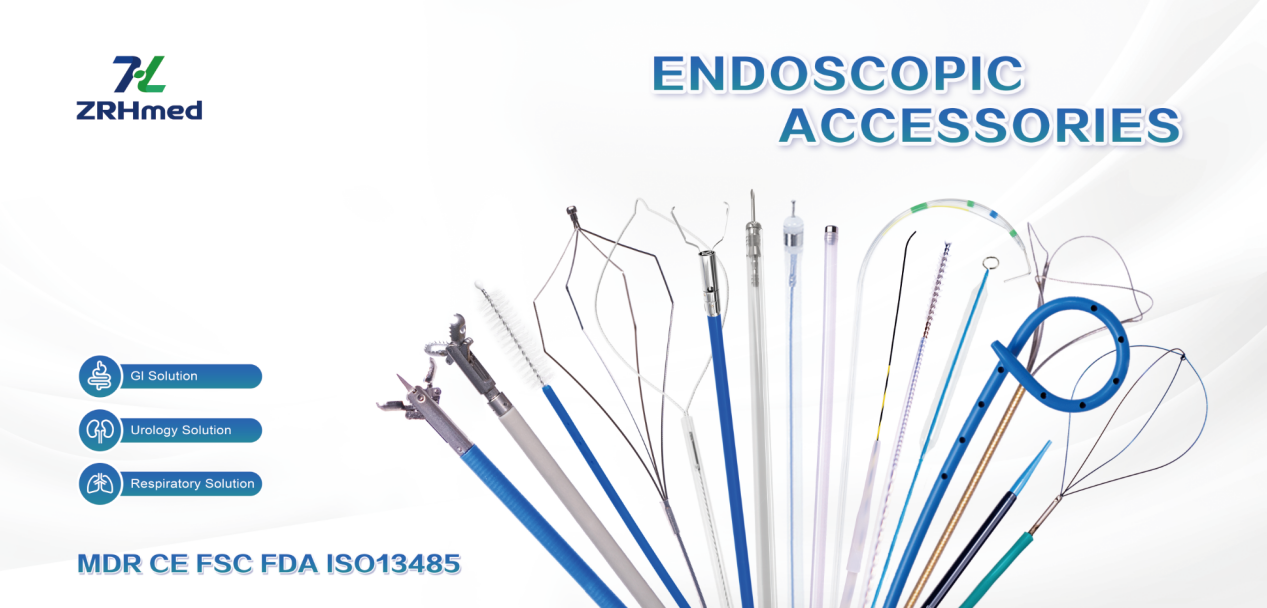
In this context, ZRHmed (Jiangxi Zhuoruihua Medical Instrument Co., Ltd.) – exemplifies the new generation of Chinese suppliers that are reshaping the global endoscopic accessories landscape. Founded in 2018 and based in Jiangxi Province-, ZRHmed specializes in the R&D, manufacturing, and sales of endoscopic consumables-, offering a comprehensive portfolio that covers the full spectrum of gastroenterology, pulmonology, and urology procedures
ZRHmed’s core products have obtained MDR CE certification under the latest EU Medical Device Regulation-, and the company holds ISO 13485:2016 quality system certification-. Its products are now used by distributors and healthcare providers across Europe, North America, Latin America, and Southeast Asia. In 2025–2026 alone, ZRHmed has made consecutive appearances at major global medical exhibitions including MEDICA (Germany), Hospitalar (Brazil), and KIMES (South Korea), demonstrating the growing international presence of Chinese endoscopic consumable manufacturers.
The H1 2026 trade data tells a clear story: China’s endoscope industry is no longer just a low-cost manufacturing base – it is becoming a global supplier of quality-assured, cost-effective, and fully certified endoscopic solutions. ZRHmed stands at the forefront of this transformation, offering healthcare providers worldwide a reliable, full-process accessory partner from biopsy to ERCP.
Post time: Aug-21-2026